

EchoPark Speedway, formerly known as Atlanta Motor Speedway, has hosted NASCAR since 1960. In 66 years of racing, most of the track’s memorable moments occurred prior to 2022, when the Hampton, Ga., intermediate track raced much like the other 1.5-mile tracks, with long runs, meaning drivers were fighting to keep their tires underneath them.
It’s hard to choose from one of EchoPark’s past finishes, because there are plenty to choose from, spanning from Kevin Harvick’s dramatic NASCAR Cup Series victory over Jeff Gordon in the spring 2001 race to Gordon holding off Jimmie Johnson for his 85th career Cup victory in 2011 as the duo waged an epic battle in the waning laps on worn tires, their cars on the edge of control.
Kurt Busch scored the final victory on the old pavement, with younger brother Kyle finishing second in what was Kurt’s second-to-last Cup win. On July 6, 2021, just days following the epic battle between the Busch brothers, the speedway began a six-month project in advance of the 2022 season.
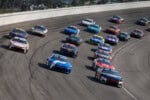
This undertaking remade the track, rebranded as EchoPark Speedway beginning in 2025, into a hybrid drafting track, with the banking increasing from 24 degrees to 28, creating a smaller version of NASCAR’s two other drafting-style tracks, Daytona International Speedway and Talladega Superspeedway.
The end goal of this project was to create more opportunities for drivers to pass while running in tight packs we typically see on high-speed drafting tracks. Now in the fourth year of the reimagined 1.5 mile oval, the reception from both fans and drivers continues to improve as the track ages.
A more worn-out track surface encourages more side-by-side racing in close packs, requiring drivers to meticulously plan their moves within a pack of 20 or more cars and stay on top of adjustments as the race goes on, especially when handling comes into effect.
It didn’t take long for EchoPark to enter the conversation about the best track on the NASCAR schedule following one of the most dramatic finishes in NASCAR history: A three-wide photo finish between Daniel Suarez, Ryan Blaney and Kyle Busch in the spring 2024 race.
Suarez’s win over Blaney and Busch had a combined margin of victory of 0.007 seconds, the third-closest finish in NASCAR history. With all the unpredictability superspeedway racing presents, a race capped off by a photo finish, let alone with three drivers instead of two, is enough to encourage fans to buy tickets.
As for the drivers themselves, EchoPark presents its own unique set of challenges that makes race strategy just as important as preparation in the days ahead with the team preparing a durable, fast car for race day. Just like any race at Daytona or Talladega, especially in the Next Gen era, track position in late-race scenarios is paramount to drivers’ success on this track configuration.
Furthermore, knowing when to take two tires vs. four in a late-race situation can be the difference between finishing inside the top five with an opportunity to win or risking getting collected in an accident, leaving critical points on the table, which means so much with The Chase approaching.
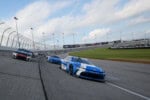
In last year’s summer race, 23 cars were involved in the Big One after Denny Hamlin was spun after getting a bad push down the backstretch. This eliminated pre-race favorites Joey Logano, William Byron, Austin Cindric and many others after just 69 laps. Nine drivers retired from the race following the wreck, with 28 of the 40 cars still running when Georgia driver Chase Elliott scored the win following a late pass of Brad Keselowski.
More often than not, superspeedways are prime opportunities for a first time Cup winner to emerge, like Carson Hocevar earlier this season at Talladega. Drivers that typically don’t find themselves at the front of the field most weekends have a better chance on superspeedways because of the high attrition rate these races present.
Despite only nine races on this new configuration, the racing product at EchoPark has shown that the decision to take an intermediate track and transform it into a hybrid superspeedway was a success.


Thanks for choosing to comment on this article. A name and email address are required to post a comment. The email address is not publicly visible or shared. Please keep in mind that comments are moderated according to our comment policy.