
Here we go again.
Maybe you’re part of the majority and don’t like that neither Austin Hill and Shane van Gisbergen nor Zane Smith after his contact with Carson Hocevar were penalized for their contact at Chicagoland Speedway last weekend in the NASCAR Cup Series.
For that, I’m in the minority. On its own, I applaud the idea to let drivers settle discrepancies among each other like they used to be able to do.
What is the problem is Ryan Preece was handed a penalty for an arguably less obvious move at Texas Motor Speedway only two months ago. The RFK Racing driver was handed a 25-point deduction and a $50,000 fine as a result of his contact with Ty Gibbs in that race.
The difference? Preece (sort of) confessed to the contact. Van Gisbergen, Hill and Smith did not, and it’s time we got rid of that damn gray line.
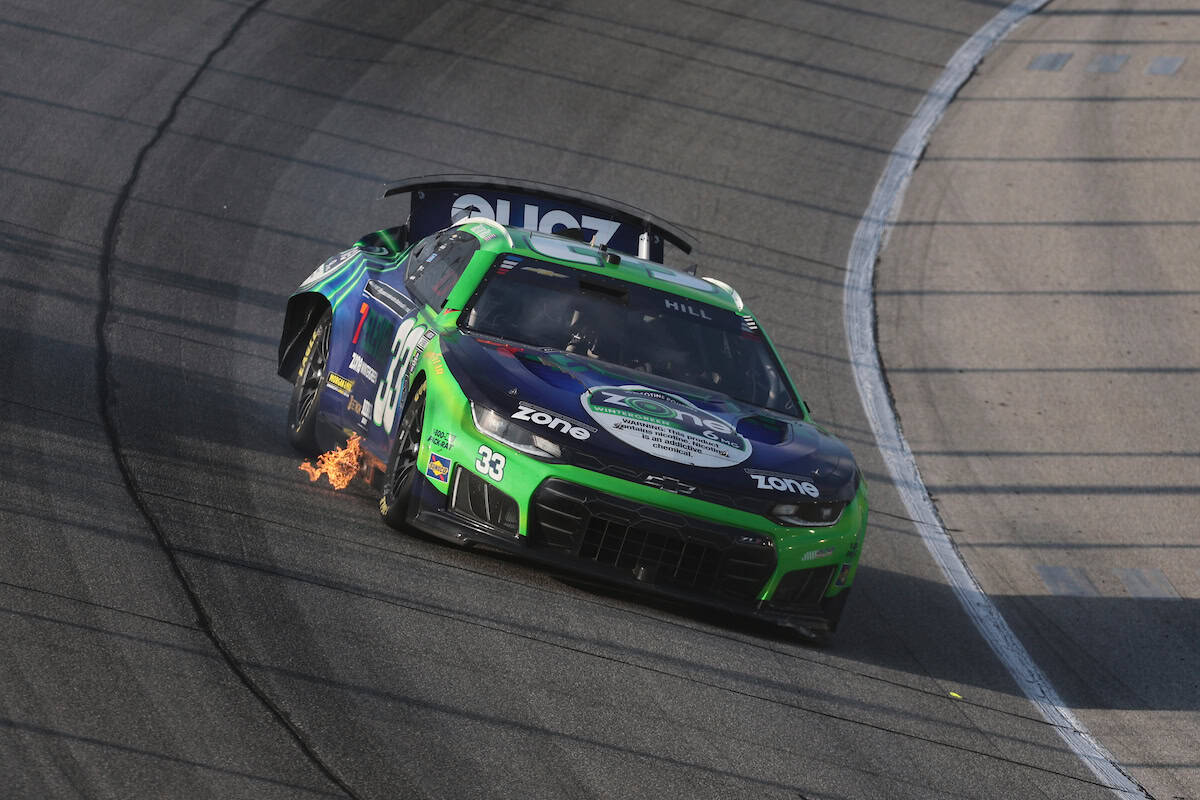
For some context, on July 8 at Chicagoland Speedway, van Gisbergen egregiously dove into the back of Hill’s No. 33 Chevrolet on lap 48, spinning the Georgia native and ultimately ending his race. Maybe just as bad, if not worse, was when Hill drove alongside van Gisbergen under caution and door-slammed the Kiwi as he left pit road.
A couple of years ago, contact like that — regardless of confession — nabbed you a solid penalty. Just ask Hocevar.
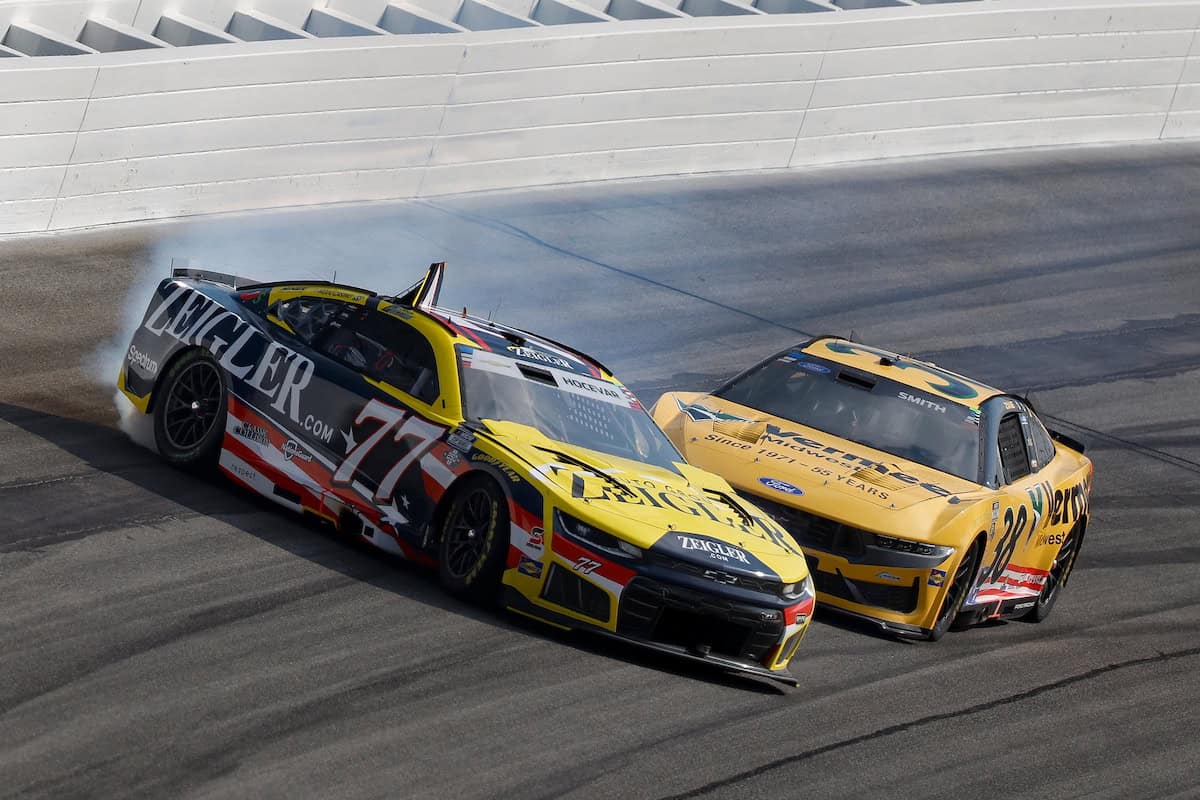
Speaking of which, Hocevar was involved in an incident with Smith only laps earlier in which Smith seemed to purposefully turn the No. 77 Chevrolet into the wall, collecting his own Ford in the process.
All three incidents were pretty darn obviously intentional. So obvious, in fact, that the TNT broadcasters themselves recognized emotional contact the moment it happened.
Commentator Dale Earnhardt Jr. recognized it immediately and said, “Somebody was not happy with something.”
But while the broadcasters knew the story immediately, NASCAR officials seemingly didn’t, because no penalties were issued to any of the three offending drivers. None of them admitted to the contact, on the radio or otherwise. That was enough for officials to absolve them of any wrongdoing.
“We looked to see if there were any anomalies throughout the race and something that spurred this that maybe was payback from earlier,” NASCAR VP of racing communications Mike Forde said on his Hauler Talk podcast. “We went through all the radio transmissions to see if there was anything that rose to kind of a smoking gun. … And nothing in our eyes proved definitively this was 100% intentional and penalty-worthy.”
In the words of fellow Fire on Fridays writer Michael Massie on this week’s Frontstretch Happy Hour podcast, that’s like if I robbed a bank in front of a crowd but didn’t talk about it out loud, I’m absolved of any wrongdoing.
So boys have at it, but do it quietly. We don’t want to wake up the officials.
What is even more confusing is Cup managing director Brad Moran said on SiriusXM NASCAR Radio’s The Morning Drive officials are still going to have a word with both Smith and Hocevar after their run-in.
“[Smith and Hocevar] were both looked at and reviewed yesterday and determined there will be no penalties issued,” Moran said. “However, we’ll be talking to both groups and making it pretty clear what we need.”
Wait, what? Why? I thought it was deemed an accident. What is there to talk about?
So Preece gets a penalty and a fine for saying something on the radio but everyone else gets a stern talking to?
That seems pretty unfair to Preece, and Preece knows it, too.
Now, I want to be fair, so let me paint NASCAR’s side of that argument for a moment. It is difficult and unfair to penalize somebody when you’re not 100% sure of their intention. One surefire way to determine that is by word of mouth and have a smoking gun, as Forde put it. The second way is to look at all the camera angles, which they did, and perceived to have no intentional actions in either incident.
OK, let’s go with that argument for a moment. Maybe van Gisbergen isn’t guilty of intentionally wrecking Hill despite their numerous run-ins over the last two years. Maybe Hill hit van Gisbergen under caution for … fun? Maybe Smith isn’t guilty of spinning Hocevar, despite them also being rivals.
That doesn’t mean they’re innocent of being reckless, either.
Both Smith and van Gisbergen drove deep into their corners and into the back of their rivals, and Hill hit another driver under caution. If those truly were accidents like NASCAR says, that might be even worse than doing it on purpose.
Maybe NASCAR should take a look if they’ve become a hazard or are making dangerous and dumb moves and penalize them for that.
But that’s a slippery slope. After all, this is NASCAR. We want drivers to be aggressive. We want them to beat and trade paint. We don’t want over policing by officials. We want drivers to police themselves.
However, that’s the problem. NASCAR officials didn’t look the other way to allow drivers to self-police themselves. They did so because they couldn’t prove there was any intentional contact at all, which may be even worse than just penalizing them.
Why is it worse? Because now drivers feel they can do whatever they want as long as they don’t admit to it. Don’t give somebody any room and admit it like Preece at Texas? That’ll be $50,000. Flat-out wreck a driver and end their day but stay silent on the radio during it? Nothing to see here.
Either all of it is OK or none of it is. NASCAR can either penalize anyone for making a reckless and obviously intentional move every time it happens and hurt the aggressive racing spirit of the sport — something NASCAR fans probably won’t like — or it can let drivers be self-policing and have them settle it themselves.
You know, kind of like how it used to be?
But you can’t have it in between and only do it when drivers admit to it. That’s not fair to drivers who want to express themselves. It’s not fair to media for wanting to tell stories of badass racecar drivers, and it’s not fair to fans who want to learn to love these drivers.

Dalton Hopkins began writing for Frontstretch in April 2021. Currently, he is the lead writer for the weekly Thinkin' Out Loud column, co-host of the Frontstretch Happy Hour podcast, and one of our lead reporters. Beforehand, he wrote for IMSA shortly after graduating from Embry-Riddle Aeronautical University in 2019. Simultaneously, he also serves as a Captain in the US Army.
Follow Dalton on Twitter @PitLaneCPT
Thanks for choosing to comment on this article. A name and email address are required to post a comment. The email address is not publicly visible or shared. Please keep in mind that comments are moderated according to our comment policy.