
NASCAR has been around for 78 years, and during that time, has gone through numerous incarnations. The sport started as a ragtag group of people who raced for fun and bragging rights. It grew in popularity to a point where they ran 62 races in 1964.
They were barnstorming across the Southeast, taking road trips to the Northeast and even California. It was for the love of the sport. No one was getting rich except for the owners. Then, 1972 rolled around and the folks from RJ Reynolds started printing money since they couldn’t use it to advertise on TV anymore. The sport instantly became a moneymaker for participants and venues that hosted races. The schedule was trimmed down but the events became bigger. It steadily gained momentum through the ’70s and ’80s.
The ’90s arrived and brought with them an explosion of popularity. Jeff Gordon pulled the strings of the corporations who realized how loyal the fans of the sport were, and the money flowed like Niagara Falls. Big race tracks sprouted up across the country, from Chicago to Kansas to Texas to California. Everyone was loving the gravy train and nobody could imagine it slowing down. The only thing that could possibly get in the way of this avalanche coming down the mountain was an inept leader.
Enter Brian France, the grandson of the founder, who had the opportunity to learn at the side of his father and grandfather as they steered the massive ship through the enormous climb to the top of the sports world. NASCAR was as close to the NFL’s equal as anyone had ever been in America. France managed to not only derail the train, he actually wrecked it. The only thing that France managed to accomplish was to stumble into the advent of streaming and the insatiable desire for live sports. He bungled his way into TV rights deals that had never been seen outside of American football.
With the ratings dying and the sport losing market share almost as fast as it once gained it, France finally fell flat and was routed from his throne, replaced by his uncle Jim, a sports car guy. Jim did his best to continue Brian’s hard work of distancing the vehicles in the sport as far as he possibly could from the name that adorns the sport he led. Brian brought in stock cars with wings fore and aft. Jim gave us flat-bottomed cars, 18-inch wheels with one lug nut and single suppliers that have eliminated all of the innovation in the sport. We can only hope that this ship can finally be turned around now that we have someone at the helm who rode the wave and managed to keep his finger on the pulse of the fans that feel abandoned by the two previous heads of the sport.
We saw the marketing campaign begin this past winter with NASCAR: Hell Yeah! It was immediately on display at the Daytona 500 when the notoriously quick triggered race control kept their caution flag in their pocket repeatedly. As the season has gone on, it has appeared as though there is more and more personality emerging in the garage area. Carson Hocevar has sparked emotion in the stands and on the screen with his aggressive style. He boldly stated that he doesn’t have any friends in the garage. His ‘throw caution to the wind’ style is evidence of the way more and more drivers are coming into the sport. The world of INEX racing with $25 bumpers and the complete lack of respect for fellow competitors has changed the face of racing everywhere. Many drivers coming up through the ranks don’t work on their cars anymore. They don’t have the understanding of the hours and effort that go into making a well-oiled machine that can beat the competition, not to mention what it takes to repair it after it is torn apart during a race.
Some of these drivers have outstanding talent, and the future of the sport looks very exciting indeed from a driver standpoint. The problem is going to be whether the car be able to showcase that racing talent. Steve O’Donnell knows what the sport looked like. He witnessed the drivers who pushed it to the top of the mountain, and he knows that the cars and the men who built them were what made the sport thrilling. The hope is that we can get back to some innovation in the sport and at least get away from the sports car mentality that is resulting in cars that cannot get out of the infield on their own and have to be towed in when they have multiple flat tires.
The other thing that will hopefully continue a developing trend is the return of the sport to its past. In recent years, we have seen Cup Series cars on the track at North Wilkesboro Speedway and Bowman Gray Stadium, two racetracks that held premier series races in the first 10 years of the sport. North Wilkesboro was on the original schedule and sits beside Martinsville Speedway as the only two tracks still in existence from the 1949 inaugural season.
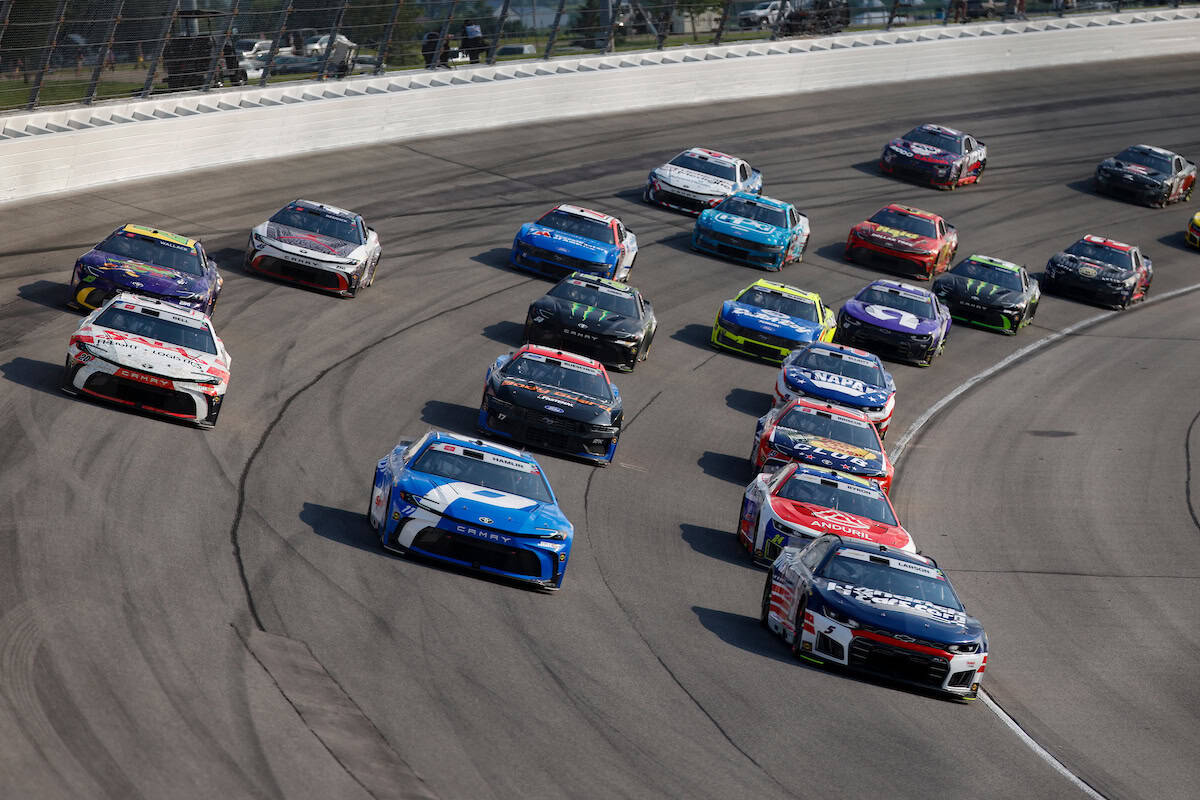
This past weekend, we were treated to another throwback as the sport returned to Chicagoland Speedway for the first time since 2019. The track put on a good race and the excitement around the event was palpable. For people who lived through the explosion in the ’90s, it is honestly ironic that fans are now thrilled for Intermediate track racing when it was absolutely despised in the early 2000s.
After the enjoyment of last weekend, thoughts will hopefully turn to another track that is still in raceable condition and would be another great return to the schedule. Kentucky Speedway is another pandemic casualty that has been off of the docket since 2020. The fans of Kentucky have been the recipients of one of the worst slaps in the face in the history of racing. Kentucky opened in 2001, and for 10 years, the fans packed that track to the gills for Truck and O’Reilly races. They did everything right and were finally rewarded with a Cup race. They showed out and worked their way through the growing pains, supporting the track as much as any other fan base in the history of NASCAR.
Yet when the COVID-19 pandemic rolled around, NASCAR tore their hearts out by taking them off of the schedule and forgetting about them. If any racetrack deserves to be back on the Cup schedule and its fans given the respect they deserve, it’s Kentucky.
This column has been a proponent of having the schedule shaken up and events at tracks that have not held races in the Cup Series, or even support series, for decades. Kentucky should be at the top of the list, but there are other tracks that will hopefully be given the opportunity as well. The sport is rebounding from some pretty dark days in the last 10 years. There is excitement and a fan base that is actually growing again. There are still many things that need to be adjusted and improved, but the signs are pointing in the right direction. If the positive momentum can continue, the memories that are stored in the closets and garages at many historic locations across the country can be shined up and help the new crowd of fans see what we’ve been talking about for years.


What is it that Mike Neff doesn’t do? Mike announces several shows each year for the Good Guys Rod and Custom Association. He also pops up everywhere from PRN Pit Reporters and the Press Box with Alan Smothers to SIRIUS XM Radio. He has announced at tracks all over the Southeast, starting at Millbridge Speedway. He's also announced at East Lincoln Speedway, Concord Speedway, Tri-County Speedway, Caraway Speedway, and Charlotte Motor Speedway.
Beg to differ, Kentucky, and Chicago hardly qualify as “old tracks”. Rockingham is an old track. Milwaukee is an old track. Nashville Fairgrounds is an old track.
Kansas and Chicago, along with Texas and Kansas should never have been built much less on the schedule.
Agree.
Gee, thanks for hogging NASCAR and not wanting to share it with the rest of the country.
You left Rockingham off your list.
Right!
I agree with 90% of this article. Enjoyable read.
I was a fan before cookie-cutter tracks, and was quite pleased when they began to be replaced on the schedule over the past 20 years. I view returning to them as a step backward. They are soulless affairs.
As for the cars straying away from “stock cars”, I’m not really certain what NASCAR should do. Americans don’t buy cars, they buy SUVs. Sure, Chevy is bringing back the Camaro yet again, but probably just as last time, only for a few years. The Camaro and Mustang are both niche cars. There was a time someone may buy a Thunderbird or Monte Carlo to haul around the family, based upon NASCAR fanship. I don’t think this is true of the Mustang or Camaro, as they already appeal to a very specific buyer.
No, Americans buy cars, not just SUVs. The problem is that America stares at smartphones all day, not cars. So where are you going to put your ad budget if someone is staring at a phone instead of a car? Exactly. I agree teams should be given more of a gray area, but the entire point of the NextGen was so that a Hendrick or a Gibbs can’t spend 60 million dollars on R & D while Cody Ware has a 20,000 dollar budget. Everyone talks of the glory days in the 90s…guys really? The races were decided mostly by large margins of victory. You had lead changes and passing, but there is MORE OF THAT NOW. There are people smarter than you or I that have recorded these numbers over years and years. I think that the car should be five lugs again and that if we have “stages” that they should just be organic and the race should not be stopped. I counted 25 laps at Bristol taken off because of those stage breaks. Another thing…..”holding off the race until commercials run.” That’s nonsense too. Let the race unfold naturally.
In the end, there are many things that are different, but racing must evolve…the cars haven’t been purely stock since the late 1950s or before. Car bodies change, people’s attentions spans get shorter.
Fact is this: IF YOU ARE A REAL FAN, you WILL ALWAYS be a fan, otherwise, you’re just fairweather and should go watch a man manage a computer in F-1.
yessir!!! 100% agree. and the sport seems to be on an upward trajectory right now, also anyone who hated the prime deal…
There is a difference between being loyal and just blindly accepting whatever Daytona gives you.
Reading the last article published by Matt, I was surprised to see someone commenting they want single-lug wheels. Now everyone hates it. Dunno why, it works just fine in Indycar and other series.
I would like to see Kentucky and Rockingham back on the schedule, too. But NASCAR hates giving race dates to tracks they don’t own.
So you think IMSA wheels and low profile tires (365/35R18 tires} and single- lug wheels are working in NA$CAR?
I’d like to see Nascar give the teams some options on setups instead of basically having every car the same. Creativity used to be a hallmark of stock car racing, but we have lost that. Almost like everyone getting a participation trophy.
I’ve always thought NASCAR is missing an opportunity… they should allow teams to use any aftermarket performance parts that are available to the general public to purchase. That would open up sponsorship opportunities for teams, as well as a plethora of options for them to choose from to set up their cars. Regulate certain things like ride height, weight, body templates, engine displacement, etc., but otherwise let it be a free for all with bolt on mass production parts (not custom engineered / built in house).