
Wasn’t that week off lovely?
I mean, sure, if you wanted to see the NTT IndyCar Series on track, it wasn’t nice. If you like racing overall, there were options with the 24 Hours of Le Mans, Formula 1 at Barcelona or NASCAR at Pocono.
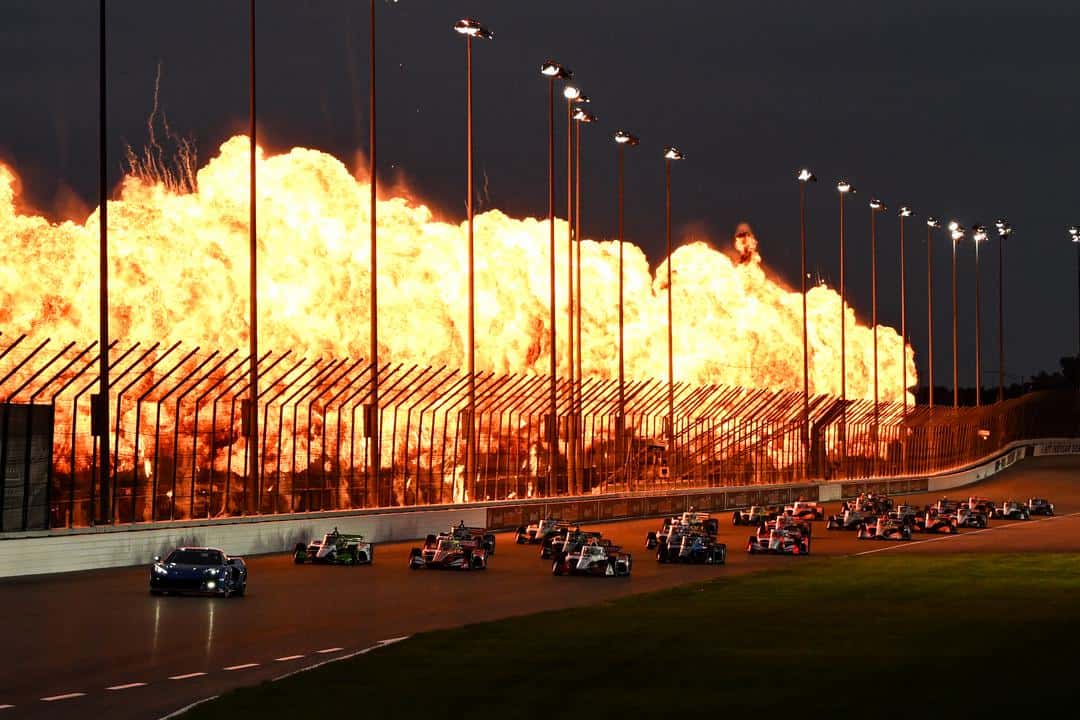
Thankfully, we have a race coming up this weekend at Road America with the XPEL Grand Prix, and with a race coming up, let’s take some time to reflect on the most recent IndyCar race at World Wide Technology Raceway.
On the surface, the Bommarito Automotive Group 500 at Gateway was a good IndyCar race.
There were 475 total passes, 268 of which were for position, which is an event record. Three of the top four drivers started 12th or worse and six drivers led.
A change in technical specifications had mixed reviews, so let’s look into what the changes were. IndyCar mandated some aerodynamic tweaks to reduce downforce and also reduced turbocharger boost pressure.
The end result? The 2026 pole speed was almost six mph slower than 2025’s pole speed.
As the night practice continued, one fact became more apparent. The tire falloff wasn’t going to be as bad as it has been in the past.
Remember that; it becomes important later.

Strategy was an important part of the 260-lap race around the 1.25-mile oval. The team that didn’t hit the strategy right was the last team you’d expect: Chip Ganassi Racing.
Kyffin Simpson ran out of fuel under a caution period and wasn’t towed back to pit road to the sophomore driver’s confusion. The No. 8 Honda was eventually towed back to the pits, but that was the start of the team’s fuel issues.
As Scott Dixon‘s strategist, Mike Hull was counting down the laps for Dixon to pit midway through the race. As the No. 9 Honda went down the backstretch, Race Control called for the yellow flag for conditions shortly after Hull told Dixon that he was to pit next time by.
The timing couldn’t have been worse for the 2008 Indianapolis 500 winner. As almost the rest of the field had already pitted, Dixon had to save as much fuel as possible so he could make it to pit road for emergency service.
Race Control kept the field on the track, trying to keep heat in the asphalt before eventually bringing out the red flag. Once the track became usable, Dixon pitted for emergency service, taking on two seconds of fuel before going back on track
That dropped Dixon to sixth place, the last car on the lead lap. The Kiwi would have to stop with the rest of the lead-lap cars for full service and then drop to the rear of the field to serve a penalty for taking emergency service in a closed pit.
After Dixon’s stop, Alex Palou brought the lead-lap cars down pit road.
And then Palou’s car began to sputter. The Spaniard ran out of fuel on pit road, and his pit stall was all the way at the far end.
As other cars were completing their service and leaving their pit boxes, the No. 10 Chip Ganassi Racing Honda kept crawling down pit road before stopping in its pit box.
The team then had to purge the air from the fuel injectors and fuel lines, losing two laps in the process. Once Palou finally achieved ignition in his engine, the rest of the race was just a test session for the four-time IndyCar champion.
When Caio Collet‘s race ended due to mechanical failure, Race Control brought out the caution flag to make sure the Brazilian’s car didn’t drop any fluids on the racetrack. With 30 laps remaining, several drivers stopped for new tires and some fuel, hoping that the tire wear disparity would help propel them to the front.
The drivers that didn’t pit made their final stops of the race on the 203rd lap out of 260. Their tires would be 27 laps older than the drivers who had just stopped, hoping the race would end like one at Iowa Speedway several years ago, when Ryan Hunter-Reay and Josef Newgarden both stopped for tires and got by late-race leader Tony Kanaan to finish on the podium.
Scott McLaughlin was running sixth before his final pit stop and dropped to ninth in the running order. After the race got back underway with 26 laps to go, it took the No. 3 Team Penske Chevrolet only two laps to get back to sixth and two more laps to get fifth place.
And that’s where McLaughlin’s race stalled out. In fact, almost everybody’s race had stalled out by that point.
From when lap 239 began until Newgarden crossed the finish line to win at the end of 260 laps, here were all of the position changes in the field:
Will Power passed Santino Ferrucci for ninth place on the 239th lap. On the following lap, Power got eighth from Marcus Armstrong while Pato O’Ward got 10th from Ferrucci.
Christian Lundgaard passed Ferrucci for 11th on the race’s 243rd lap and got by his teammate O’Ward for 10th six laps later.
That’s it. Despite O’Ward, Power, Lundgaard and Armstrong all having new tires, none of them could make any further passes for position the rest of the way.
Tire durability was great, as there were no tire failures this time around at the egg-shaped oval. However, the lack of tire falloff meant that the risk of taking late pit stops was not able to pay true dividends.
Let’s look at the rest of the weekend. Other than weather, there’s one thing missing from the weekend and that’s a bit more track activity. IndyCar, Indy NXT, the vintage IndyCars and the USAC Silver Crown series had their sessions, but the weekend was missing something to keep spectators entertained with on-track action.
If it were possible to get one of the ARCA series or the USF Pro 2000 championship to Gateway, that would help limit the number of gaps in the schedule. In fact, ARCA could race on Saturday afternoon after IndyCar qualifying to help lay rubber down ahead of IndyCar’s final night practice session. But it’s always easy to look at on-track scheduling with the benefit of hindsight.
Speaking of scheduling, this race is the final race in an extremely busy stretch for teams after a hectic month of May in Indianapolis, a weekend in Detroit and then one weekend in St. Louis. This race is in a great spot on the schedule, but fatigue is evident across the paddock.
If there has to be a race after Indianapolis, this should be the race immediately after the Greatest Spectacle in Racing. What better way to follow up a fantastic finish at Indianapolis than some short track racing (assuming Milwaukee isn’t available) near the Gateway Arch?
There is the matter of Detroit. Event organizers have said in the past that the race has to be in its current spot on the calendar because people are still in town, because kids are in school, meaning that more families can go to the race and more suites will be at capacity.
If that’s the primary reason, then why not have Detroit run the week before the road course race at Indianapolis? Kids will still be in school, the suites would be full and the teams wouldn’t be fatigued from being at IMS during May.
While we’re at it, ban testing in June and then mandate two off weeks after Gateway if somehow it can be the race after Indianapolis.
Because let’s face it, the teams need a break sometimes.


Christopher DeHarde has covered IndyCar racing and the Road to Indy for various outlets since 2014. In addition to open wheel racing, DeHarde has also covered IMSA and various short track racing events around Indiana. Originally from New Orleans, DeHarde moved to the Indianapolis area in 2017 to further pursue a career as a motorsports writer.
The teams need a break? Great, if I had a crew bitching that their job they fought hard so get was too tough, I’d give them a forever break. The average size for an Indy Car crew member seems to be about 320lbs, 5 ft 5″, maybe just get them a wheelbarrow to haul that massive beer gut around…