
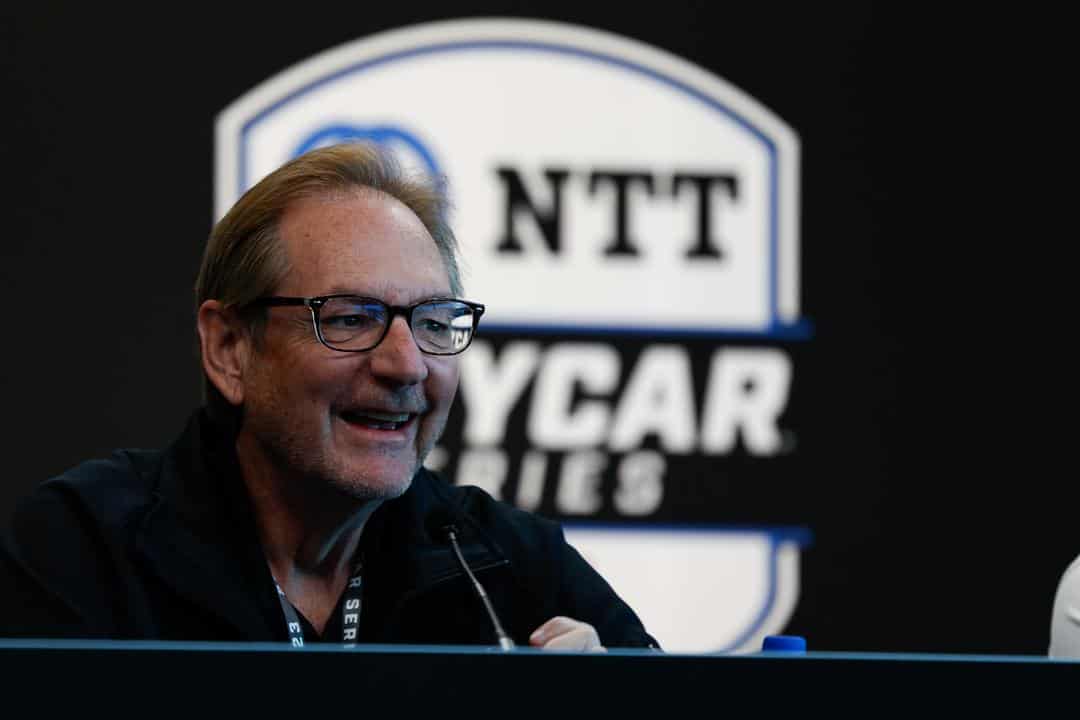
Dennis Reinbold might be one of the last of his kind in the NTT IndyCar Series and the fabled Indianapolis 500.
With the news of his death from cancer on Friday (June 14), and the status of his Dreyer & Reinbold Racing unclear, his tragic passing might signal the end of the mystical Indy 500 one-off teams.
We are heartbroken to share the news that our owner, leader, and friend, Dennis Reinbold, has passed away peacefully, surrounded by his loving family. We ask you to join us in supporting the Reinbold family and respecting their privacy during this painful time.
— Dreyer & Reinbold Racing (@DreyerReinbold) June 14, 2026
Dennis was a… pic.twitter.com/KUDMlcAv4R
Once a constant piece of the Month of May, the teams that came together or formed to compete solely at Indianapolis created dynamic stories each year. Think John Menard’s Buick stock block engine going for poles. King Racing, owned by six-time NHRA champion Kenny Bernstein, breaking track records in 1992. Fledgling Juncos Racing, before they became a full-time chartered entry, bumping out two-time Formula 1 champion Fernando Alonso in 2019.
As the cost of competing at the Greatest Spectacle in Racing rises and the necessity to have full-time staff to massage and streamline chassis to maximize speed in the spec world, the privateer-type entry has faded.
Those types of teams are a legacy that goes back to the golden era rise of the Indy 500, as ingenuity was the guiding principle when Memorial Day came around each year. Ranging from well-funded operations like Menard to the smaller, mom-and-pop type cars, there was an everyman feeling that if you were fast enough, then making the grid was for the taking.
Now, that may be over.

Yes, there will be Indy one-offs still, as there has been throughout history to expand the full-time field of 25 to 27 cars to hit 33. But those come from existing full-time efforts that added cars either for their own team, or as a partnership to Indy NXT junior series owners or other motorsports operation groups.
DRR was different. Indy was all they ran, and Reinbold did it himself.
They have been a consistent Indy 500 one-off entry because of the dedication and passion he had for the race. While they started as a full-time IRL team with beautifully liveried Purex blue racing machines, budget restraints and costs pushed them to Indy-only in 2014. Since then, every Memorial Day, Reinbold put an effort together to compete. Over recent years, in a remarkable story, the DRR led laps and was a contender and was in the hunt in 2025 with Ryan Hunter-Reay.
Incoming rule changes to the charter system will prevent open entries from qualifying at other IndyCar races. While the opportunity still remains for teams like DRR to enter the Indy 500, the incentive to make a go at it is fizzling. The biggest motivating factor, money, isn’t enough to get more than DRR and a couple of last-ditch efforts invested. The cut of the $30 million purse going to non-charter teams is pennies compared to their full-time brethren. Just this past May, DRR’s 12th-place run by Conor Daly took home $138,000. The two cars bracketing them in the standings earned over $1 million due to their charters.
Yet, Reinbold didn’t care. He put together his team, sold the sponsorship, and funded two drivers. Across the paddock, he wasn’t an outsider, but a man respected and his team was as professional as any other. He epitomized the past tales of previous personalities like him that were captivated by the grand quest to compete and fight for the honor to be etched in silver. There never seemed to be doubt that he was going to get his car on the grid, because that drive and love for Indianapolis never wavered, even as the rest of the IndyCar season took off into the horizon without him.
Now, the question is: will his team continue his legacy? That’s not known, but with just one more season with the current car, it will take a new investment to get ready for the 2028 Indy 500. That’s a lot of financial commitments for any person or team to make, and if the new ownership isn’t as ensnared by the mystique of 16th and Georgetown, the DRR might fade into history.
Leaving Reinbold as one of the last great one-off owners.


Tom is an IndyCar writer at Frontstretch, joining in March 2023. Besides writing the IndyCar Previews and frequent editions of Inside IndyCar, he will hop on as a fill-in guest on the Open Wheel podcast The Pit Straight. A native Hoosier, he calls Fort Wayne home. Follow Tom on Twitter @TomBlackburn42.