
Columnist Note: For my take on the Carson Hocevar–Ryan Blaney fight (of which we have many on this website), feel free to pop over to the Frontstretch Podcast Network and check out Happy Hour — I was this week’s guest on the program.
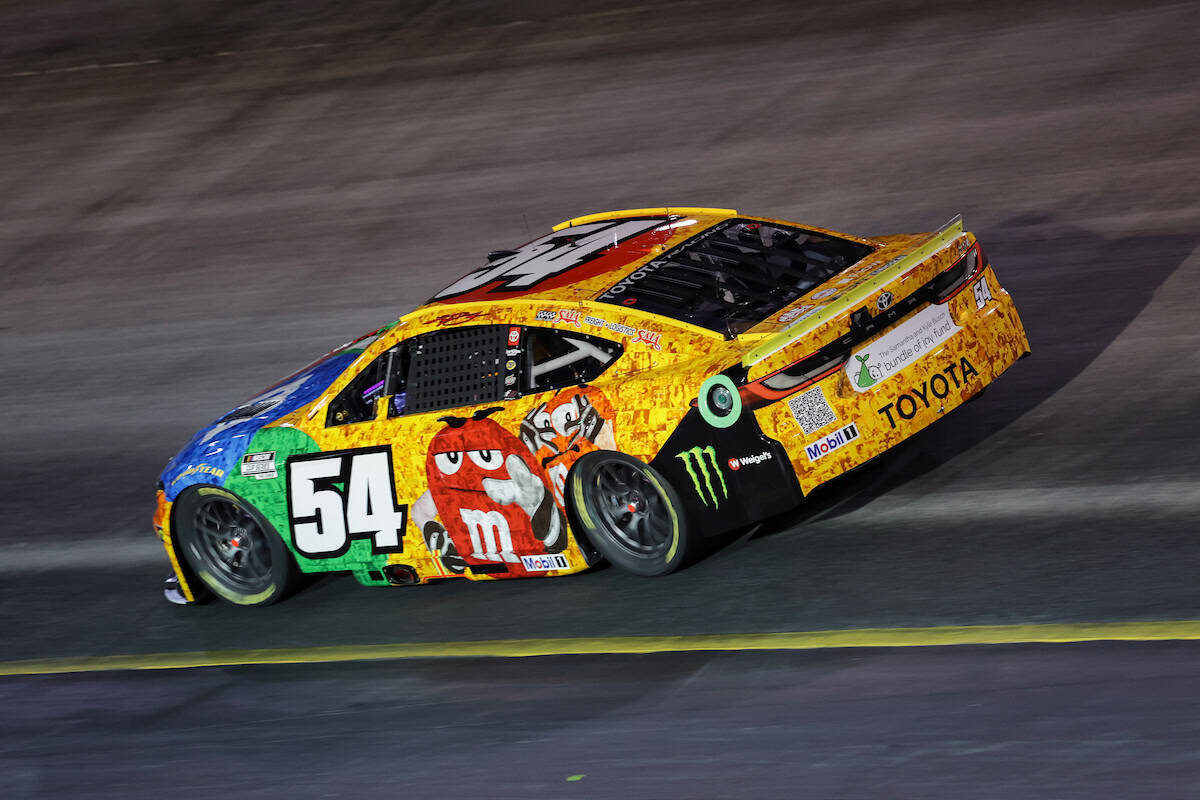
Did You Notice? … It wasn’t just Kyle Busch who Ty Gibbs paid tribute to at Bristol Motor Speedway this past weekend? In the midst of honoring the future NASCAR Hall of Famer who was taken from us far too soon, Gibbs brought back an iconic sponsor to the sport in Mars M&M’s. The candy company backed Busch from the 2008-22 seasons and several other drivers before that, but they’ve spent the past few years on the outside of the sport looking in.
With the nostalgia and excitement drummed up by the M&M’s return, there’s always hope they might reconsider their marketing decision and reenter the sport once again. And their cameo got me thinking … what are the other major sponsors who have defined NASCAR through the years fans miss the most? Ones who could still come back under the right circumstances?
Here’s a few that come to mind. Let us know your favorites in the comments if it’s not listed here!
Coors Light
Coors first came to the sport in 1984, sponsoring a young, rising talent named Bill Elliott who had just won his first Cup race at Riverside in the 1983 season finale.
What a time for them to hop on board.
Within two years, Elliott established himself as a force at NASCAR’s top level, peaking with an 11-win 1985 season that included a $1 million bonus as part of the new Winston Million program. In their eight years together, Elliott won two Daytona 500s, a Cup title in 1988 and rose to become Cup’s Most Popular Driver.
Driver and sponsor parted ways after 1991 and Coors bounced around a bit, switching to the Keystone brand before realigning themselves with Kyle Petty in the mid-1990s. After a few lean years, Sterling Marlin got behind the wheel and took the brand to victory lane consistently once again. In 2002, he nearly took the beer company to a second championship before a neck injury at Kansas Speedway in the fall derailed his title bid.
The company stopped sponsoring a car at the end of the 2007 season, transitioning into NASCAR-only sponsorship (remember that Coors Light pole award?) for another decade before calling it quits.
In an era where not a single beer company was a primary sponsor at Bristol this past weekend, wouldn’t it be great to see the Silver Bullet back on track?
Lowe’s
Lowe’s, similar to M&M’s, is doing a one-off of its own at the 2027 Daytona 500 where they’ll have a small logo on Jimmie Johnson‘s car in the final Cup race of his career.
If only it were a precursor for Lowe’s to be back full time. First sponsoring Mike Skinner on the Cup side in 1997, the sponsor bolted to Johnson and Hendrick Motorsports in 2002, where it struck gold. The duo won a record-tying seven championships together along with two Daytona 500s, going along for the ride as Johnson emerged as one of the best drivers in NASCAR history.
After bringing Johnson on board, Lowe’s held its own in a little NASCAR home improvement war with Home Depot. Tony Stewart, Joey Logano and Matt Kenseth took that orange car to two championships of its own during a 15-year run. Unfortunately, Home Depot chose to exit the sport after the 2014 season, and Lowe’s chose to follow suit four years later.
Target
Who could forget the bulls-eye car that became the can’t-miss red car on the track? A longtime partner with Chip Ganassi Racing in the NTT IndyCar Series, Target had a very successful 1990s in open-wheel racing before popping up with a one-race sponsorship deal on the NASCAR side in 2001.
That sponsorship of Sterling Marlin’s No. 40 translated into a full-season deal backing Jimmy Spencer during the 2002 season. A long, sordid history of winless seasons and disappointments followed (Casey Mears, Juan Pablo Montoya) until the partnership found sustained success with a young rookie named Kyle Larson.
Larson was impressive, breaking through with four wins during the 2017 season. But Target’s marketing goals changed and, with major rival Walmart never entering Cup full-time, they chose to spend their money elsewhere despite Larson’s impressive campaign.
Target hasn’t been seen since. But they remain one of the most recognizable companies in the world … and one of the most recognizable schemes.
UPS
Similar to the home improvement wars, the big brown truck brought packing and shipping to NASCAR with their backing of Dale Jarrett beginning in 2001. While the car was iconic, the results were not: Jarrett was on the tail end of his prime driving for Robert Yates Racing, and the company suffered through several lean years in the sport.
After following Jarrett away from RYR and to Michael Waltrip Racing’s Toyotas in 2007, UPS eventually realigned itself with a young driver it thought would take them to long-term success: David Ragan. But there, too, UPS’ driver never met expectations, with Ragan winning just once in their time together (2011).
By 2014, they were out of the sport despite luring competitor FedEx in, who sponsored the No. 11 of Denny Hamlin at JGR for nearly 20 years. FedEx, too, has recently left as a sponsor, leaving the shipping lanes wide open for DHL to have a monopoly in racing: They’re currently backing five-time IndyCar champion Alex Palou.
There are so many other sponsors to be remembered fondly (and some not so fondly): Viagra on Mark Martin’s car in the 2000s, the Skoal brand on Harry Gant’s car beginning in the 1980s, Kodak Film and Morgan-McClure Racing from the 1980s through the mid-2000s. But the ones listed above, to me, are the ones most likely to rethink their decision with the right driver and opportunity.
Can NASCAR lure them back in?


The author of Did You Notice? (Wednesdays) Tom spends his time overseeing Frontstretch’s 50+ staff members as its majority owner and Editor-in-Chief. Based outside Philadelphia, Bowles is a two-time Emmy winner in NASCAR television and has worked in racing production with FOX, TNT, and ESPN while appearing on-air for SIRIUS XM Radio and FOX Sports 1's former show, the Crowd Goes Wild. He most recently consulted with SRX Racing, helping manage cutting-edge technology and graphics that appeared on their CBS broadcasts during 2021 and 2022.
You can find Tom’s writing here, at CBSSports.com and Athlonsports.com, where he’s been an editorial consultant for the annual racing magazine for 15 years.
A name and email address are required to post a comment. The email address is not publicly visible or shared. Please keep in mind that comments are moderated according to our comment policy.
Comments are listed in order from oldest to newest. Leave a comment