
1. NASCAR is Inadvertently Stopping Drivers from Speaking Their Minds After Wrecks
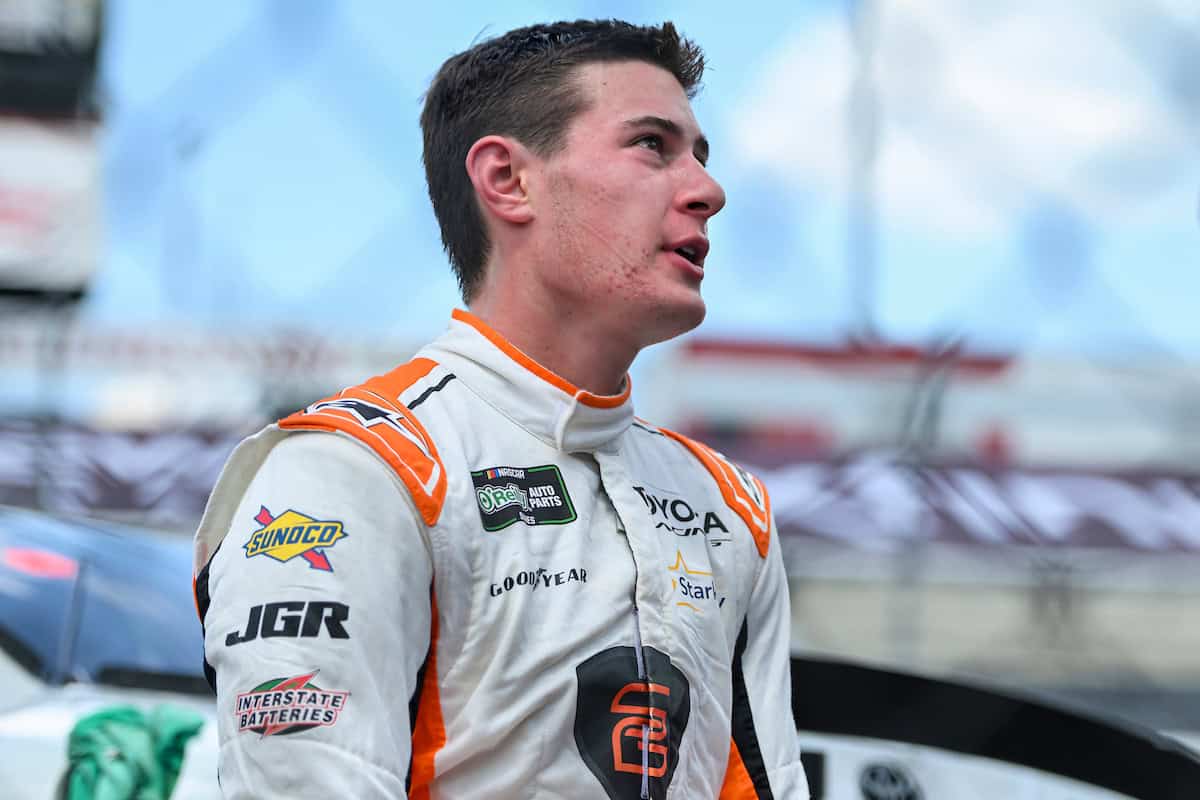
William Sawalich’s incident in the NASCAR O’Reilly Auto Parts Series race at World Wide Technology Raceway with Corey Day on Saturday, Sept. 12, which also impacted Justin Allgaier’s race, definitely got people talking. Well, most people.
NASCAR has been doing a lot this season to try to make you think that series officials care about drivers being genuine. The swear jar gimmick is a great example. Carson Hocevar has been more or less lab-created for this campaign that NASCAR has been pushing around him.
But then, when it comes to on-track incidents, NASCAR does nothing but penalize drivers for admitting that incidents were done on purpose. Which leads to what we had on Saturday night, where Sawalich gave his Marshawn Lynch-esq interview with TV before refusing further comment to other media outlets, including Frontstretch.
If Sawalich is to blame for the wreck is one thing entirely, then skip to the next point for that. But I can’t blame him at all for refusing to further comment on the situation, because it leads to nothing good.
NASCAR needs to stop looking at what drivers say and instead focus on what drivers do when considering disciplinary measures. NASCAR knows more than any of us, because of the SMT data. Taking words into account in situations like this simply discourages any words from entering the conversation.

2. Should Sawalich Be Suspended for a Race?
The short answer is yes. The long answer is that he should have been parked in the race on Saturday, and NASCAR’s decision not to should require them to suspend him for this week’s race at Bristol Motor Speedway.
Denny Hamlin argued on his podcast this week that NASCAR shouldn’t suspend Sawalich, because it’s a self-policing garage. Well, how much self-policing goes on, exactly?
A lot of the kids in the TRD system now, like Sawalich, prepare for their NASCAR career by hopping into an ARCA Menards Series car with 10 times the budget as the rest of the field. Then when they move up, most of them don’t know how to actually race people because that’s a skill you don’t learn lapping the field in ARCA.
I like Sawalich, for the record. He’s got more speed than he gets credit for. He has the eighth-best average start this year among full-time drivers, after being seventh in that category last year. Very comparable numbers to his teammates.
But he has to fix the mistakes if he’s going to make the next step up. Turn this into a teachable moment; the people he’s pissed off are too busy trying to win a championship.
I also don’t think Sawalich will be suspended, because he didn’t say anything too incriminating. But NASCAR can be surprising sometimes.
3. The Return of the Truck Series Is Upon Us
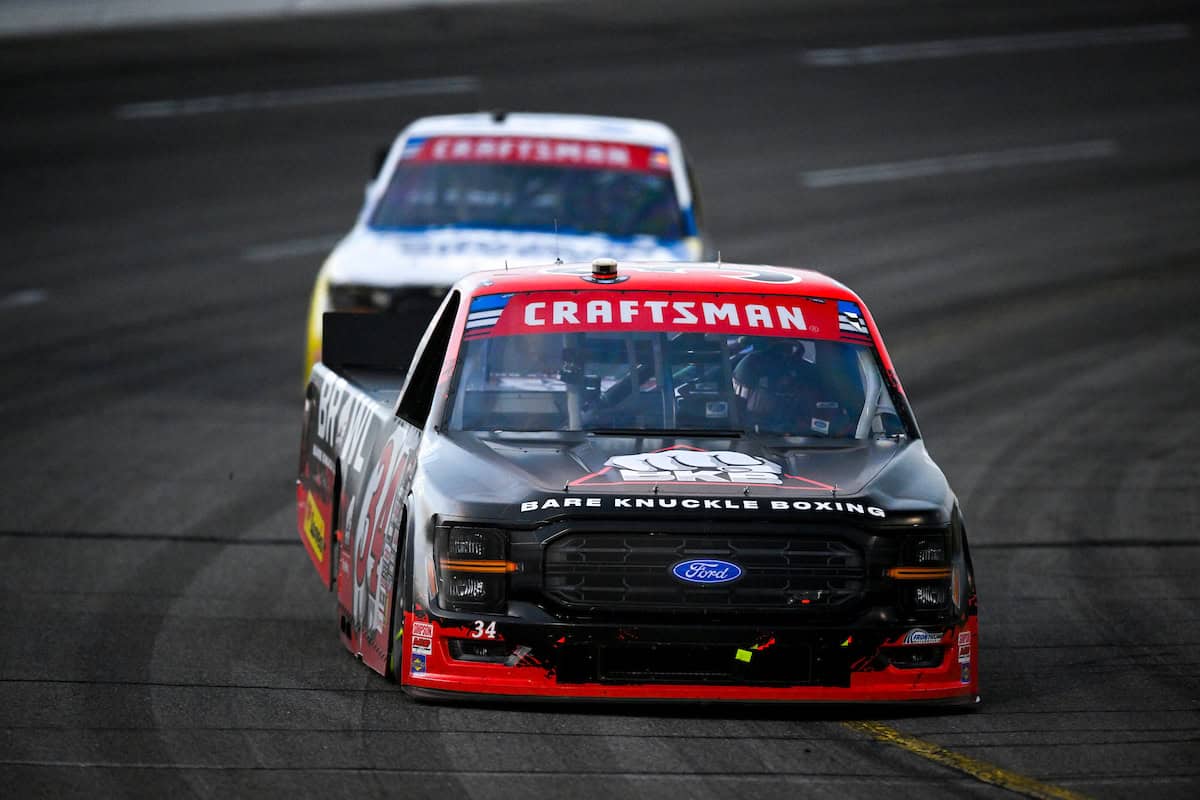
After a month off, the NASCAR Craftsman Truck Series is finally back in action, this time under the lights of Bristol.
This will be the first Chase race of the season for Trucks, and the start of an eight-week, seven-race grind to end the year.
Layne Riggs has to be a bit nervous after watching Allgaier and Hamlin both start their title bids with lackluster runs in their respective series’ opening two races.
If there’s anybody who can step up to Riggs, the best candidate is probably Kaden Honeycutt. Honeycutt has seemed on the brink of really breaking out and winning a bunch of races this year, but has only managed two.
The data backs this up as well. Only three drivers have an average driving rating this season of over 100. Riggs leads with a 111.5, but Honeycutt is right there with a 108.1. Chandler Smith has a 100.2, but it would be a bit surprising if he challenges for the title as Riggs’ teammate who’s leaving at the end of the year.
Riggs and Honeycutt are also 1-2 on fastest laps run (350 versus 219), average running position (7.4 versus 7.6), and green-flag speed, which Honeycutt actually has the slight edge on Riggs (5.2 versus 5.3). This Chase could be either a Riggs coronation or a heavyweight title fight.
4. Who Can Be Crossed Off From the Cup Chase?
It’s hard to say anybody is truly out of the running.
Only three drivers have gained points on Hamlin in the last two races, in spite of Hamlin having some of his worst non-drafting and non-road results of the season. And yet, Kyle Larson is one of them and he’s gained 46 points on the No. 11 Toyota.
Christopher Bell has also gained 32 points. The lesson here is to win races to close the gap.
The only other driver to gain on Hamlin? Joey Logano, who is up 14 points on Hamlin and is sitting 51 points back. Of course, Logano’s pace of gaining seven points each race on Hamlin on average would indicate that “Even Year Logano” will win the championship over Hamlin by five points. So no, Logano will not be crossed off today.
That said, it’s probably fair to say the bottom half of the Chase are all out of it. Hocevar, Bubba Wallace, Chase Elliott, Austin Cindric, Chris Buescher, Ryan Preece, William Byron and Daniel Suarez already had issues these first two races, and there’s no indication they’re going to make comebacks.
Chase Briscoe in eighth and back by 59 points has a shot, but he’s either going to need some wins or some bad luck by the top seven.
5. Stages Are Still Unnecessary to what NASCAR Wants Competition-wise.
This Chase has shown the benefits of stages in that it has rewarded drivers who run well. It’s the biggest reason why there’s only one driver within 10 points of Hamlin and not a dozen.
I’m still a proponent of removing them. There’s actually an easy fix to keep those benefits without the drawbacks of stages.
Why do stages exist outside of competition? Supposedly, it is because they drive interest and viewership throughout the race. The issue is that Joe NASCAR fan doesn’t care about points. He’s just here to watch the race because it’s on. If anything, he’s turning over to football while NASCAR takes its sweet time just running laps under the stage caution.
Get rid of stages. Keep the current points allotment as-is, except for the following:
- Add five more points for winning the race, bumping that up to 60.
- Award points to the top 15 lap leaders on the day.
As an example, if Hamlin leads 200 laps, he’d gain 15 points if he led the most laps. If Larson led the second-most laps on the day with 68, he gains 14 points. Tiebreakers are broken by final finishing position.
If there are fewer than 15 lap leaders on the day, the tiebreaker still applies, so it continues through the next driver in the finishing order without laps led on the day.
What this does is force teams to worry about who is leading every lap, not just three on the day. Not pitting during cautions becomes a huge strategy play, as that could award a driver a bundle of points if they were to lead under the caution.
It also makes finishing positions much more important, while still awarding drivers for running at the front all day.


Michael has watched NASCAR for over 25 years and has covered it on-and-off for 14.
In addition to Frontstretch he also writes sporadically for his own websites GrandPrixFocus.com and StockCarFocus.com.
A name and email address are required to post a comment. The email address is not publicly visible or shared. Please keep in mind that comments are moderated according to our comment policy.
Comments are listed in order from oldest to newest. Leave a comment