

Who… should you be talking about after the checkered flag?
Young, brash and fearless, Carson Hocevar has drawn comparisons to a young Dale Earnhardt. The comparisons often refer to Hocevar’s aggression — the 23-year-old has plenty of talent, but he has also made a lot of other drivers angry with a take-no-prisoners driving style.
That style has probably cost Hocevar more than one win in the NASCAR Cup Series. But it also suggested once he figured out how to channel that energy, it was going to be tough to keep him from the front of the field.
On Sunday (April 26) at Talladega Superspeedway, Hocevar figured it out. Despite early handling issues, he put himself in an excellent position in the final stage, which was a sprint to the finish thanks to NASCAR changing stage lengths to prevent fuel saving late in the race. In the closing laps, Hocevar battled Chris Buescher for the top spot, leading his line and blocking successfully as the pack roared through in two-by-two formation.
The caution flew with just a handful of laps left when Ricky Stenhouse Jr. turned Hocevar just enough to make contact with Erik Jones, setting up a three-lap run to the finish. All it takes in that situation is for a driver to make one bad block, and it’s all over. At one point, Hocevar had the chance to block Buescher — and didn’t. That move won him the race.
The Jack Link’s 500 is Hocevar’s first career Cup Series win in his 91st start and the second Cup victory for Spire Motorsports. Hocevar was also the third driver to take his first series win at Talladega this weekend. Andy Jankowiak got his first ARCA win on Saturday, and a few hours later, Corey Day won his first O’Reilly Series event.
Hocevar has shown more restraint in 2026, just enough to keep from making enemies, and it’s made him a near-weekly threat. Now that he’s figured out how to take the speed he’s shown and put together a complete race, he’s dangerous, and not because of his earlier penchant for crossing lines.

On the other hand…
Despite a start to the season that has seen Toyota drivers win seven of the first nine races and start from the pole Sunday after the qualifying washout, Talladega was not kind to any of them.
The top running driver for Toyota was points leader Tyler Reddick in 14th, with Denny Hamlin also inside the top 15. Thanks to the track’s predictable unpredictability, six Toyotas finished 22nd or worse.
What… is the big question everyone should be asking after the race?
Following his maiden win, Hocevar celebrated with a wild victory drive, sitting on the windowsill of his car and waving to the grandstands while driving at a pretty good clip down the frontstretch. It drew huge cheers from the crowd in attendance as he rolled up to the frontstretch wall and did a short burnout.
While the show of personality — a la Earnhardt leaning out of his running car to clean the windshield — was a fan favorite, will NASCAR make a rule to put an end to it in the future?
New NASCAR President Steve O’Donnell told Hocevar immediately after the race he was “good with it,” but will that opinion stand after the sanctioning body has a day or two to ruminate?
As much as the display of youthful exuberance delighted the crowd, it probably should not be allowed to continue. That’s not because the celebration was over the top or showed personality in spades – as some will surely claim if it happens – but simply because it was as dangerous as it was original.
Hocevar nearly hit the inside wall before he rolled down the frontstretch, without wearing a helmet, and then lightly crashed into the outside wall after appearing he’d be able to stop the car.
Yes, it ended well… this time. It’s a bummer that one of the most popular moves in recent memory should come under scrutiny, but it could easily have ended in tragedy. Remember when Connor Zilisch fell off the car and injured himself last year? And that’s with the thing completely stopped.
So, those worries are not an exaggeration; one slip-up could have resulted in serious injury to Hocevar, or worse. And that’s an ending nobody wants to see.
Where… did he come from?
Talladega is a track where starting in the back of the field doesn’t spell a long, difficult day. It presents a challenge, but one that can be overcome.
This week’s race saw two drivers finish in the top 10 after starting in the bottom 10. Zane Smith lined up 30th and had a strong run, scoring his third top 10 and first top five of the year. Smith also laid down the fastest lap time of the day on lap 45 for an extra bonus point.
Also turning a back-marker start into a solid finish was Kyle Busch, who desperately needed a good run. He got it on Sunday despite getting roughed up a little in the Big One, charging up to finish 10th, his first top 10 of 2026.

When… are we going to talk about the points?
Despite being involved in two separate incidents on the day, Reddick widened his point lead over Hamlin after an early pit road penalty left Hamlin a lap down for most of the race and locked out of stage points. Reddick got a few by finishing seventh in the opening stage and beating Hamlin to the finish by one spot. He now holds a 110-point gap over his boss.
Ryan Blaney held onto third but dropped another 12 points to Reddick and is 140 back. Chase Elliott gained a pair of positions to sit fourth while Ty Gibbs fell one to fifth after finishing 34th.
Kyle Larson slipped to sixth after his early exit in the lap 115 melee. Buescher climbed all the way to seventh after his runner-up effort, with Hocevar just behind him in eighth. Buescher and Hocevar were the big gainers of the week, each moving up four spots.
Christopher Bell and Brad Keselowski round out the top 10. The biggest slide of the weekend was William Byron, who finished 35th after falling victim to the Big One, as he fell four spots to sit 11th.
As the regular season nears the halfway point, Austin Cindric currently holds down the 16th and final spot above The Chase cutline by a slim four points over Chase Briscoe. Ross Chastain and Shane van Gisbergen are others on the outside looking in.

Why… should you be paying attention this week?
The Cup Series says howdy to Texas Motor Speedway this Sunday (May 3) for its only visit of 2026. Last year’s edition featured Joey Logano’s most recent Cup win, so he’ll be hoping to recreate that particular magic this time around in the midst of a dismal start to the year.
Logano, who is one of just three active drivers with multiple Texas wins (two), isn’t the only one who’ll be looking to turn his luck around. Active wins leader Kyle Busch (four wins) could certainly use a pick-me-up coming off his first top 10 of 2026. Hamlin is the only other multiple Texas winner with a trifecta.
Reddick would like to join that club this weekend, and he certainly should be on everyone’s radar with both his white-hot start to the year and his series-leading 11.0 average finish at Texas. If that kind of consistency is the key to a great day, then also keep an eye on Byron and Erik Jones, both of whom have average finishes inside the top 12.
How… did this race stack up?
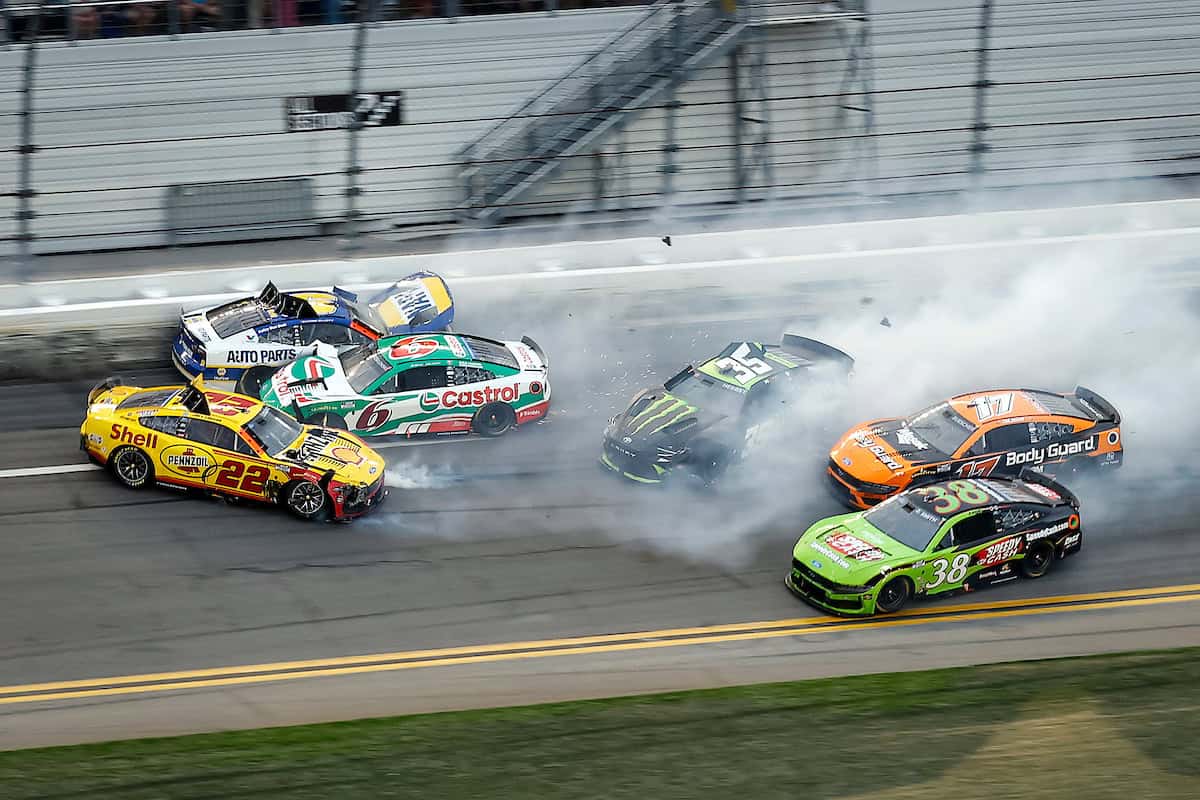
Overall, except for the 26-car crash, the race was fairly entertaining.
One positive for the sport happened before the weekend even really got underway. It didn’t get a lot of mention due to qualifying getting rained out, but it isn’t very often these days that a race outside of the Daytona 500 has enough entrants that someone fails to qualify. Beard Motorsports and driver Casey Mears earned the dubious honor of not having enough owner points to make the show, but it’s a good thing that at least at a track where everyone can dream of a win, teams still want to show up and race.
The first half of the event was an improvement over recent superspeedway races. NASCAR’s stage length changes didn’t fix everything; in particular, the fans of one huge pack and some crashes might have been disappointed. But overall, the racing was good, and pit strategy livened up the race. The pack was broken up into several smaller versions, all of which were able to race much more efficiently than one big one. There were differing strategies, creating drama, and the field raced to the stage end despite fuel worries. There was still some fuel saving, but in reality, the drivers are always going to hold back early here to avoid exactly what happened to kick off stage two: a 26-car pileup.
There’s a simpler and better solution, though. Eliminating stage cautions would eliminate the mileage racing issues, and it probably would have avoided the giant pileup as the pack wouldn’t be one, big seething mass of cars. That doesn’t mean NASCAR has to kill stage points, which do provide some harder racing. But given the number of green-flag commercials fans were subjected to, the excuse of the stage cautions reducing those is pretty hollow at this point.
Bottom line: The final stage was pretty racy. However, superspeedway racing has been reduced to the whole field alternately saving fuel (and equipment) or crashing, and it doesn’t have to be that way.
At the same time, if NASCAR brought back true old school superspeedway racing, plenty of fans would be disappointed in the smaller packs, fewer passes up front and, of course, less wrecking.
So, here we are.


Amy is an 20-year veteran NASCAR writer and a six-time National Motorsports Press Association (NMPA) writing award winner, including first place awards for both columns and race coverage. As well as serving as Photo Editor, Amy writes The Big 6 (Mondays) after every NASCAR Cup Series race. She can also be found working on her bi-weekly columns Holding A Pretty Wheel (Tuesdays) and Only Yesterday (Wednesdays). A New Hampshire native whose heart is in North Carolina, Amy’s work credits have extended everywhere from driver Kenny Wallace’s website to Athlon Sports. She can also be heard weekly as a panelist on the Hard Left Turn podcast that can be found on AccessWDUN.com's Around the Track page.
NASCAR should eliminate the stage breaks everywhere, but we all know the TV networks aren’t going to give up two guaranteed commercial breaks.
About midway through the race the clowns in the booth were talking about what a great and experienced pusher Stenhouse is on super speedways. I couldn’t believe they said that. Stenhouse has made plenty of enemies over the years wrecking other drivers, mainly in the draft and especially on plate tracks. Of course, once again he didn’t disappoint, causing the wreck that ended Jones’ chances of a good finish. Something Legacy could really use.
Kyle Busch didn’t call him “Wrecky Spinhouse” for nothing!
And when he was dating Danica, aka Princess Crumplefenders, he was known as Prince Consort Crumplefenders.
Since NASCAR will not give up the stage breaks then at a minimum don’t count the caution laps. Stage 2 and stage 3 went green with about 38 laps left. 15% of the laps were run under caution on purpose for no reason other than nascar wanted a caution at these points. They should refund 15% of ticket price.
Yes, stop counting the stage caution laps!!
Definitely a proponent of eliminating all stage cautions, but I’m not sure it would completely solve the fuel run problem on drafting tracks.
You’d still have strategy to possibly cut out stops, and shorten stops. Drafting tracks are unique (in NASCAR) in that unless you’re leading, you can save a lot of fuel while maintaining pack speed. Also, shorter stops for fuel mean a lower likelihood of losing the draft on a stop.
Still, I hate the artificial drama of stage cautions, so it would be fun to find out. Possibly the old days of multiple packs happening during the race would cut down a lot on the three wide parade laps. Was fun back in the day, seeing trailing packs getting in line and running hard to try and catch the lead pack. Was also fun seeing the lead pack try and keep order, to keep the trailing packs from latching back on.
There’s no reason to have a ‘competition yellow’ at the end of the stage. The points can be awarded based on the position that the top ten crossed the start/finish line. We didn’t have to stop for the Unocal money – way back when. Then it eliminates the fuel-saving issue.
i’m still quite dumbfounded that the cup series is supposed to be the “best of the best”. 25 cars in one wreck. if this was an isolated incident i could see it, but everytime at restricted track, something happens. sometimes i wonder what would happen if the drivers didn’t have spotters and crew chiefs in their ears as a distraction.
I agree they lean far too hard into “best of the best”.
In this case though, I think it’s the nature of the aero package and tapered spacer. Running 2 – 3 wide at around 190mph bumper to bumper, with bump drafting required, is always going to lead to carnage.
Add to that somehow Toyota apparently has too much curvature in their rear bumpers, and we see what happened Sunday. Two Toyotas spun off the bumper of the car behind bringing out cautions, and we nearly had a third, with Bell all over the radio telling his team how badly pushes were upsetting his car. I’d love to hear the explanation behind that design choice. It did not appear to be an issue of poor alignment on the bumps.
I think there are “some” drivers around the country who deserve to be in Cup cars but the trend seems to be kids who dreamt of a ride in Cup and trying to get them. I’m sure Bubba (sorry the name matches) Pollard and others would be more deserving of a ride but I expect they’d rather run the high paying short track real races and make enough money to keep them happy. How many drivers in Cup wouldn’t mind a $50,000 payday for one days work?
End stage racing? The drivers who some call the top elite supreme athletes in the world say if it weren’t for stage breaks they wouldn’t be able to run the entire race. The drivers who if they competed in the Olympics, some claim would win every medal and break every record can’t drive a car for a few hours without nearly dying. I don’t remember Dale Earnhardt, Bobby Allison or Richard Petty working out to be able to survive and the cars back then took much more effort to drive. So I say remove the breaks, go back to the pits being open unless blocked and see if these modern day wussies can still compete.
Dale Earnhardt died in the car, and Bobby Allison’s career ended with a wreck resulting in brain damage.
Stage racing sucks. All I needed to see yesterday from a supposed 500 mile race were the last 3 laps. Award points at the end of a race by finishing order.
Horsepower is needed on the superspeedways plain and simple for good racing.