
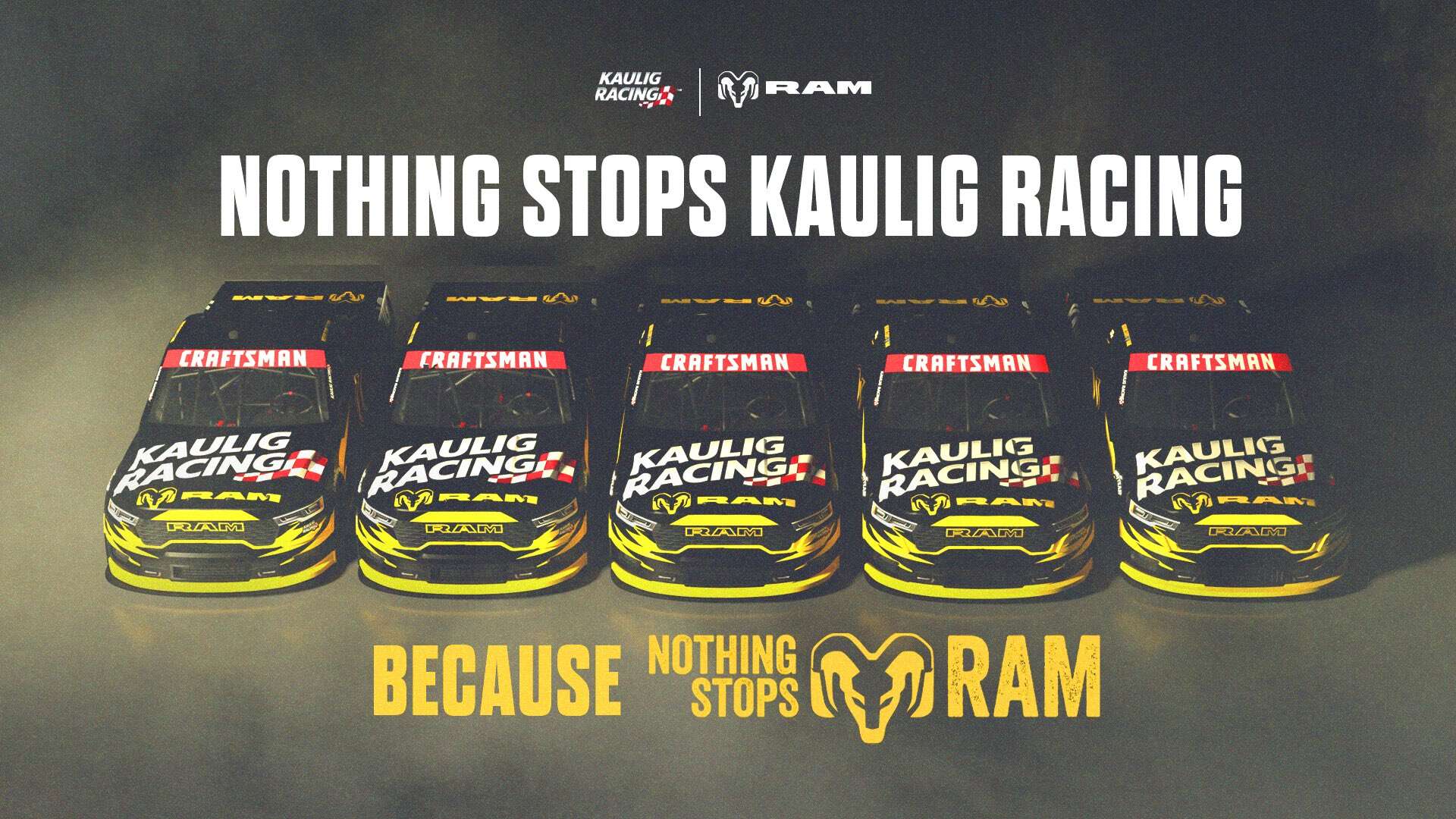
As the 2026 NASCAR Craftsman Truck Series driver roster has come together, there was one seat everybody was wondering who the driver would be: The Kaulig Racing No. 14.
Kaulig paired up with Ram for the manufacturer’s first season back in the sport in nearly 15 years, announcing it would field five trucks – Daniel Dye in the No. 10, Brenden Queen (known by fans as “Butterbean”) in the No. 12, Justin Haley in the No. 16 and a free agent No. 25 truck that would be filled by a rotation of drivers throughout the season, starting with Tony Stewart at Daytona International Speedway.
The fifth truck, the No. 14, would be decided via a reality TV competition dubbed Ram: Race for the Seat. Akin to the old Roush Racing: Driver X show from the mid-2000s, 15 drivers competed in 10 challenges, with the driver who scored the most points at the end of it all winning the seat.
So how did the show do?

Unfortunately, the show was a mess from the start, as it was announced in early January, only a month before the season started, and it didn’t get as much fanfare as it probably ought to have. With the deflating ending to the 2025 NASCAR season as a whole, along with a tumultuous offseason that featured a landmark lawsuit and the deaths of Michael Annett, Greg Biffle and Dennis Hamlin, I’m not so sure the hype was there.
The airing schedule was another mess too. The show premiered Jan. 28, but the first four episodes dropped on YouTube before the second episode dropped on television. The series wrapped on YouTube on Feb. 6, one week before the television airings are supposed to wrap – seemingly by design, so the show’s finale would lead directly into the pre-race coverage for Daytona.
The problem is, the “mystery driver” who won the seat would have already practiced and qualified the truck before the final episode on TV. Honestly, the television schedule should have followed the YouTube schedule to avoid confusion.
Speaking of spoiling the “mystery driver,” the decision to air the show really late in the offseason gave away some spoilers without even having to watch the show. Some drivers such as Tanner Reif and Chase Burrow announced full-time schedules in other series well before the show even aired, let alone the finale.
But the biggest spoiler came in the ARCA Menards Series. Traditionally, drivers looking for approval to run Truck and O’Reilly Auto Parts Series races on bigger tracks have to run the January ARCA test at Daytona and/or the race itself (nowadays drivers opt for the former since the ARCA race now falls after the Truck Series race).
You wanna know who showed up on the entry list for both the test and the race?
And he was the only one of the 15 drivers from the show to do so.
That likely killed most fans’ interest in the show – why watch an entire show where you know the outcome?
That wasn’t gonna stop people from watching the show, but it became apparent early on that the points format Kaulig was using to determine the champion was not truly indicative of performance.
When the 15 drivers were first announced, this author was under the impression that all 15 of them would compete against each other at the same time. That was not the case. The drivers were split into three groups of five – the “R” group (the fastest drivers), the “A” group (the mid-tier drivers) and the “M” group (the slowest drivers). These groups were determined by a few hot laps in the first episode. The only time you could move up or down was by either winning your group to move up or finishing last in your group to be relegated.
Then, there was another issue. The points for every group were the same – 10 for first, eight for second, seven for third, six for fourth and five for fifth. That meant that if you won the “M” group, you got more points than the guy who finished second in the “R” group, which essentially nullified the point of ordering the groups by speed.
The winner of each group (which. if you haven’t figured out yet, spells “RAM”) per episode moved on to the prize money race, where the winner walked away with $5,000. However, no bonus points were awarded. While everyone wants to win money, the prize money races were pretty much meaningless to the show if no points were given out. Drivers who excelled in prize money races ended up with nothing to show for it.
For example, Casey Kelley won two prize money events – the only driver to do so – and while he got $10,000 for his troubles, he ultimately gained no ground on the points leaders because there were no bonus points awarded.
Some of the challenges made sense: a CrossFit challenge to test physical performance, a marketing competition to understand if they were able to be good brand ambassadors and even a simulator challenge to get them accustomed to weekly sim testing like most teams do. Others … did not. Why on earth are we putting potential Truck Series drivers in go-karts? What could that possibly prove toward driving a truck weighing over 3400 lbs?
And ultimately, the point system put in place did not benefit those who excelled and actually benefitted drivers who didn’t do so well. As good of a driver and person as Tyrrell is, nothing about his performance in the show screamed capable of winning the seat. He won some challenges, sure, but ended up doing nothing in the prize money races, which ultimately should have cost him, while the aforementioned Kelley actually won a couple of prize money races and got no closer to the points leaders than if he just didn’t compete in the prize money races at all.

Other drivers such as Michael Christopher Jr. (who actually made a Truck Series start with Halmar Friesen Racing in 2025) and Ryan Gemmell, who had some pretty solid outings (more than Tyrrell at least), they ended up buried in the middle-to-rear of the points because the other drivers scored just as many or more points than them despite having worse races in their respective groups.
Then, there was the apparent stifling of the drivers by the Kaulig group based on certain measures that they didn’t wanna see. For example, one theme of the show was team owner Matt Kaulig saying, “don’t wreck my racecars,” and there were times where you could tell drivers didn’t want to use the bumper to make moves for fear of being chewed out by upper management.
One big flare-up came in the first episode, when Reif called out the legends cars for major disparities in speed. Kaulig CEO Chris Rice fired back by chewing Reif out for correctly pointing out the difference of setups. If a driver isn’t allowed to give feedback about the cars and how they run, then how can they ever be successful as a racecar driver?
Ultimately, it felt like the drivers should have all been competing at the same time; for example, some of my favorite challenges were the CrossFit and commercial challenges because everybody went up against everybody, and points were awarded 15-1. However, the commercial challenge was an issue in and of itself because it was a judged competition – when you bring opinion into the fold, you’re unlikely to get the fairest winner. To be frank, Gemmell felt like he had the best commercial, not Tyrrell.
Despite all that, there was some good to come from the show – if they insisted on the system that they had, the relegation system was a fun way to keep drivers motivated. The selection of almost exclusively grassroots drivers was awesome to see. The ability to let drivers’ personalities be on full display in the Ram Driver House was neat. Kaulig putting a race in the No. 25 up for grabs in the final episode was pretty cool, made even cooler by the fact that Carson Ferguson won the ride despite losing the full-time seat minutes prior..
Though if you ask me, I’d be shocked if every driver on the show didn’t make an appearance in the Truck Series at some point in 2026, be it in the No. 25 or with another team (such as Christopher with HFR again). Even though some drivers were kind of absent throughout the whole competition, such as Jonathan Cash, Grant Griesbach, Trevor Ward and Cody Kelley, as well as other drivers who made little noise, such as Kade Brown, Jared Fryar, Landon Huffman, Austin Beers and Burrow, it feels like Kaulig wouldn’t sign them to the show and give them free apparel just for a week-long show.

And if Kaulig doesn’t give them a one-off, it feels like someone will. Brown, Ward, Fryar, Huffman, Burrow, Beers, Christopher, Reif and the Kelley brothers can excel on short tracks, while Cash, Griesbach and Gemmell could make some noise on an intermediate, superspeedway or road course.
However, it seems like Kaulig is open to doing a second season of this, as there have been several mentions of this season being “Season 1” – so there could be a chance the other 14 guys could return next season for another shot, but that’s assuming there is a second season. With as messy as the show was, from the promotion to the points to the prize money races, it’d honestly be surprising if a second season happened (and it’s also assuming a ride will be available next season to compete for).
As for Tyrrell, it’s unfortunate that some people who disliked the show will enter the 2026 season not rooting for him because he won. The fact is, he’s one hell of a wheelman in the zMAX CARS Tour, and he actually deserved to be signed outright instead of being forced to compete on a show for the seat. While he’ll likely do as well as he can, there are some high expectations likely being placed upon him for the season.
Overall, the show was … fine for what it was branded as. But in the end, it doesn’t feel like it was a true indicator of finding “the best driver” for the seat. If they decide to do a second season of this, there has to be kinks ironed out to make it work better.
Either way, Kaulig and Ram have now set their Truck Series lineup for 2026 (aside from the No. 25, but given its purpose, that’s not surprising). It’s time to see how everyone does as the series heads to Daytona on Feb. 13.
You can watch the full Ram: Race for the Seat show here.
Follow @AnthonyDamcott on X.
I assume the 4 team limit on cars is in the Cup series only?