
The NASCAR O’Reilly Auto Parts Series had barely begun to race the inaugural event at Naval Base Coronado before a manhole cover had come loose and wound up lodged in the grill of Corey Day’s car. The wayward cover damaged the radiator and the oil cooler, which would have been the end of Day’s chance to contend.
Then NASCAR made the highly unusual choice to allow the No. 17 team to repair the car during the red flag condition. I saw phrases such as “unheard of” being used to describe the situation and wondered how that made Hendrick Motorsports executive and former star driver Jeff Gordon feel.
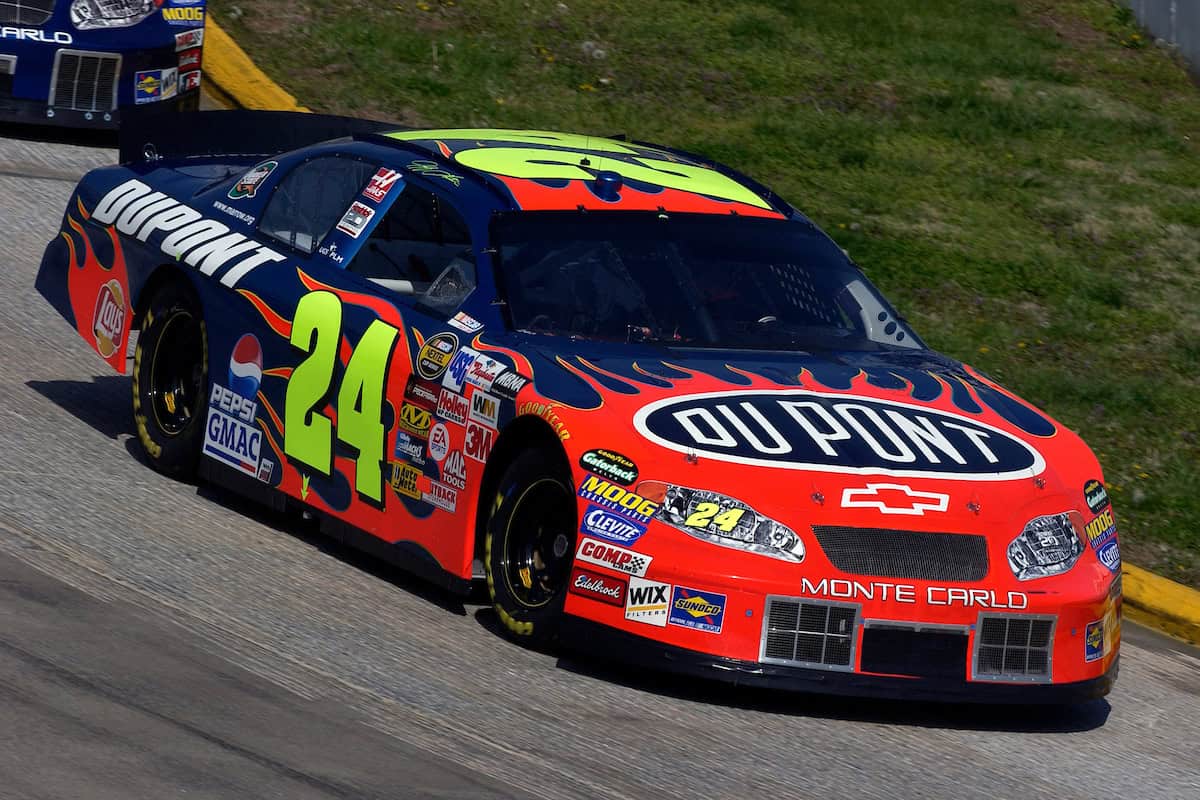
After all, Gordon found himself in a similar situation during a race at Martinsville Speedway in April of 2004. But the rule stringency was drastically different on that day.
Gordon came into the eighth race of 2004 buried in ninth place in the standings. He had only one top five finish in the first seven races and only managed to lead a lap in four of them. But Martinsville was one of his best tracks, having won both of the events there from the pole in 2003.
Then he qualified on the pole for the third straight time and seemed to be poised to continue his recent dominance. He was strong out of the gate, leading 180 of the first 272 laps.
Then while running second under caution, Gordon suddenly sustained damage despite not hitting another car or the wall. It was revealed via replay that he had actually impacted a piece of the racetrack that had come up in turn 3.
Gordon was absolutely livid, feeling that he and his team were a victim of the condition of the facility. He told crew chief Robbie Loomis over the radio that the hit was so jarring that it jerked the steering wheel right out of his hands.
He pitted for the crew to replace his tires and assess the damage during the yellow flag. In an interview, Loomis said that he felt that NASCAR should allow the No. 24 to regain the track position that they lost by pitting to make repairs.
The red flag was displayed and the cars were brought to pit road while officials determined what would need to be done to fix the track and then made the repair. Gordon was shown on television talking to then NASCAR president Mike Helton, no doubt making his case to get his place back.
Gordon told FOX Sports reporter Dick Berggren: “I’ll tell you what happened. A huge piece of concrete was in my way. I’m laughing about it now but I’m not happy about this. We work so hard to get that track position and we’ve got such an awesome race car.”
He continued, “There’s no doubt in my mind that we can do it, but man is it gonna be a lot of hard work. First, we’ve gotta come in to fix it … it’s mainly just the fender. It’s just unfortunate.”
Helton then examined the front of the No. 24 Chevrolet during the red flag. Ultimately, when the race resumed under caution, Gordon was not allowed to retain his position from prior to sustaining the damage. The team had to make multiple stops to make repairs without losing a lap.

He restarted in 21st, the last car on the lead lap. Gordon worked his way up through the field but ran out of time, crossing the finish line in sixth.
Rusty Wallace was the primary beneficiary of Gordon’s troubles, as Wallace picked up his 55th and final career Cup victory. Gordon would only have to wait one more week for his first triumph of 2004, as he would edge Dale Earnhardt Jr. for the checkered flag at Talladega Superspeedway.
NASCAR has a lengthy history of not permitting things that they feel would affect the outcome of a race. While seemingly fair in this situation, they held on to that hard stance and gave the Hendrick Motorsports team no concessions.
Day should consider himself rather fortunate as he was given a break that even a four-time champion didn’t get.


Frank Velat has been an avid follower of NASCAR and other motorsports for over 30 years. He brings a blend of passionate fan and objective author to his work. Frank offers unique perspectives that everyone can relate to, remembering the sport's past all the while embracing its future.
Follow along with @FrankVelat on Twitter.
I believe the next race was one of the events they red-flagged as soon as Gordon was in front, so it balanced out for him.
Had some friends at that race. Was glad I missed that one. The delay made for a brutally long day in the stands.
As you said, the rules were different then. Thankfully the rules have been changed.
“…history of not permitting things that they feel would affect the outcome of a race. ” Everything they do affects the outcome of the race. Every second they are affecting the outcome. Closing the pits to stack cars up and increase the chances for a wreck, affects the outcome. Closing the plots also forces the cars to all pit at the same time, increasing the chances of crew members getting hurt.
The only time I can recall that NASCAR ever did anything like they did Sunday for Day, happened back in the 90’s with Dale Sr. I don’t remember the exact circumstances, year or track (Charlotte maybe), but Earnhardt had been penalized, causing him to lose a lap. RCR disputed the call, and after reviewing it Earnhardt was given his lap back. In the 50+ years I’ve been following NASCAR, I can’t think of any other examples of NASCAR giving a lap or laps back to a driver other than “Lucky Dog”, yellow wave arounds, etc situations.
Later that year, the same thing happened to Ted Musgrave in the Truck Series. They disputed the call and asked NASCAR to get his lap back. NASCAR basically told them tough luck, so he had to race to get his lap back. So I think that this rule will end up being a special Hendrick, Gibbs, 23XI rule for them only.
I was there. The delay to repair the track was for a long time, seems like close to 2 hours. They filled the hole with some kind of epoxy and tried using a jet dryer to accurate the curing process. Gordon probably would have won if not for that but it’s also cool to have seen Rusty’s last win.