
This article is posted in collaboration with an outside partnership client. The opinions and information contained within do not necessarily represent Frontstretch and its staff.
Remember when Fridays at a grand prix were unwatchable? Two practice sessions that meant nothing to anyone outside the pit wall, commentators explaining tyre degradation curves to viewers who had already switched tabs. You couldn’t bet on it. You couldn’t even argue about it at dinner.
Silverstone in 2021 killed that version of Friday when the first sprint qualifying session replaced the second practice run, and suddenly the opening day of a race weekend had stakes. Sportsbook operators tracking odds through 1xbet f1 noticed the change in their dashboards before the broadcast audience fully caught on, because sprint qualifying generated its own betting markets the moment it appeared.
F1 published the full sprint format rules on formula1.com and the schedule speaks for itself. Practice, qualifying, sprint, qualifying again, grand prix. Five sessions across three days. No dead time left.
Half an Hour and Nobody Pits
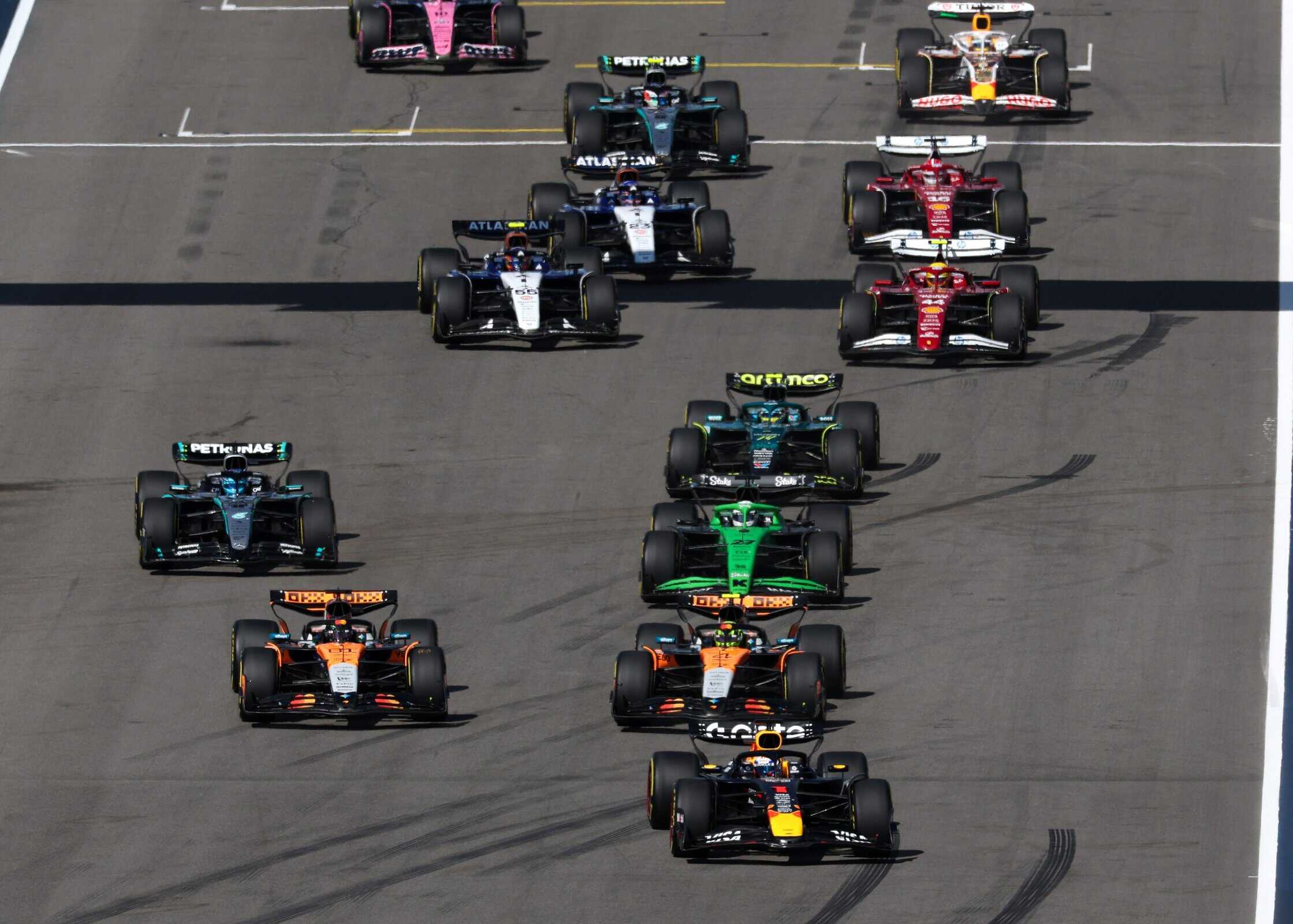
Thirty minutes. Maybe slightly more, maybe less, depending on how many laps the circuit layout requires to hit 100 kilometers. No mandatory tyre changes, no pit strategy, no fuel window games.
Pick a compound and go. The thing that makes sprints odd to watch the first time is how quiet the pit lane stays. You keep waiting for someone to box, and nobody does, because the entire race is designed to be one single stint at full attack.
That stripped-down format attracted bettors who got sick of watching a well-placed undercut decide a grand prix winner from the pit wall rather than on track.
If you follow the qualifying closely, the sprint grids are readable. Usually. Safety cars rewrite the script harder here than in a full race because there’s no pit stop window to absorb the chaos of a restart, which is why sprint in-play odds move so violently when a yellow flag drops.
Verstappen Won a Title on a Saturday
The points structure went through an awkward adolescence. In 2021 only the top three scored, and the reward was so small that midfield drivers had no mathematical reason to risk anything.
F1 expanded the payout to the top eight from 2022 onward, eight points for the winner down to one for eighth, which means each sprint distributes 36 points and a full six-sprint season puts 216 championship points on the table outside of regular grands prix.
How much does that matter? Enough that Verstappen clinched his 2023 championship at a sprint in Qatar. On a Saturday. Before the grand prix even happened. If you’d been holding a championship futures bet on him, that sprint result settled it a day early.
For constructor bets the math is even messier, because both cars from a strong team can hoover up sprint points while a rival’s second driver finishes outside the top eight.
Six sprint weekends can quietly build a 40-point constructor gap that never shows up in the Sunday headline results.
26.6 Million People Watched Miami’s Sprint
TV numbers are what convinced F1’s commercial partners the format was worth keeping. Sprint weekends averaged 10% more viewers than standard grands prix in 2025, and the Miami sprint pulled 26.6 million, an 18% jump from the year before.
Friday gate attendance at circuits rose too, because casual fans who used to arrive Saturday for qualifying now have a reason to show up 24 hours earlier.
More viewers, more open apps, more people placing a wager between sessions they wouldn’t have watched at all three years ago. If you’re betting a sprint weekend end to end, you have four separate competitive events with their own markets.
Sprint qualifying, sprint race, grand prix qualifying, grand prix. That’s roughly double the wagering windows of a normal race weekend, and sportsbooks staff accordingly.
The 2026 Host List and What Might Come After
- Shanghai and Miami return for a third consecutive sprint year
- Montreal hosts its first sprint weekend ever
- Silverstone gets one again, five years after being the circuit that started the whole thing
- Zandvoort picks one up in what might be its last season on the calendar
- Singapore adds a sprint to an already chaotic night street race
Talk of expanding to 10 or 12 sprints from 2027 is moving beyond casual discussion, and reverse grids keep coming up as a way to inject more unpredictability. Right now, sprint betting prices off qualifying form because track position without pit stops is almost everything.
Flip the starting order and you’d need to price overtaking ability, dirty air tolerance and first-lap aggression instead, none of which fit neatly into existing models.
Sportsbooks don’t love markets they can’t model confidently, and a reverse-grid sprint would be exactly that.