
Have you ever gotten that sensation where you are ready to sneeze and run to grab a tissue, only for nothing to come out of your nose?
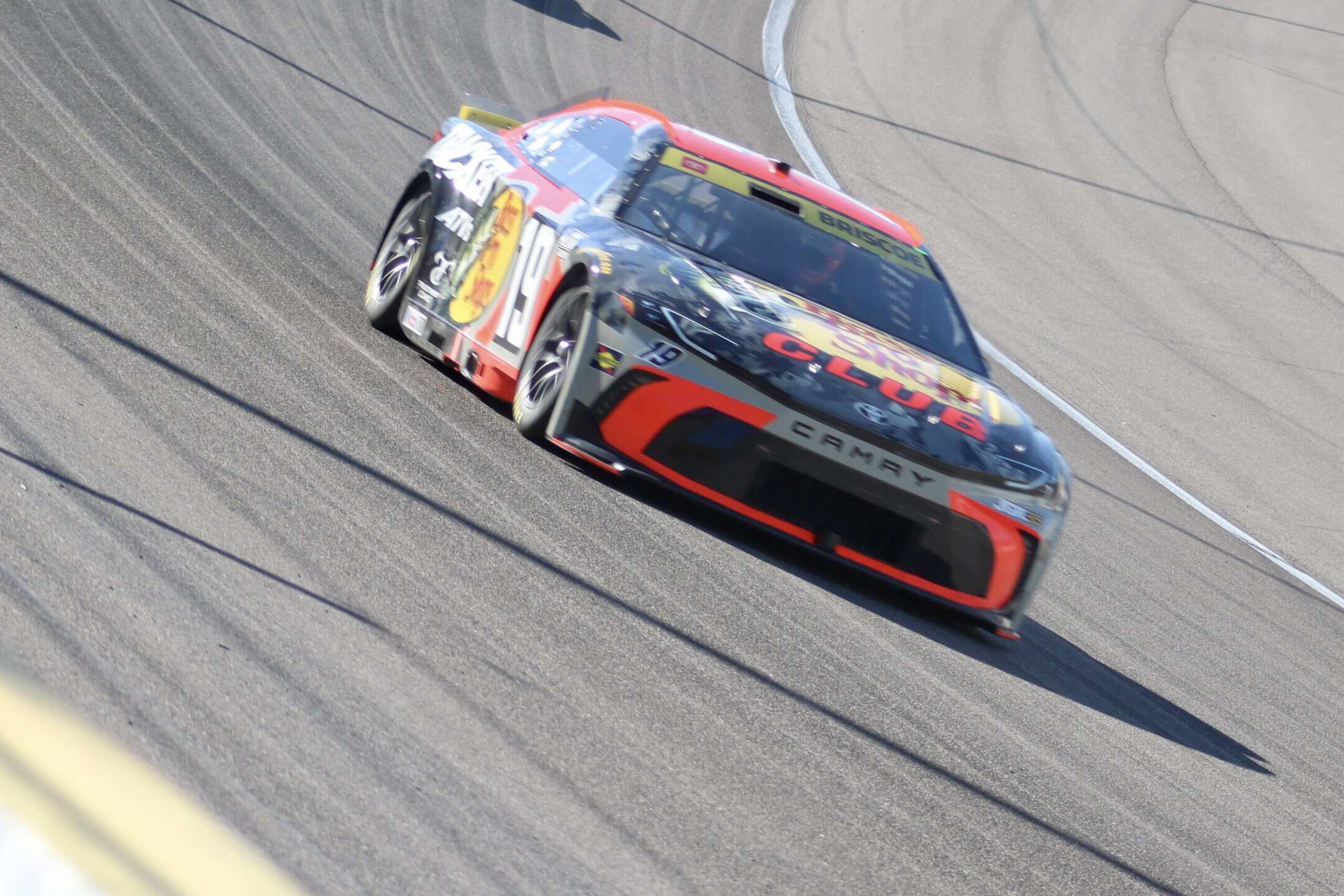
That’s what the finish to Sunday’s (Oct. 4) South Point 400 at Las Vegas Motor Speedway was.
Bubba Wallace, Kyle Larson and Tyler Reddick were all faster than Chase Briscoe and ran him down in the final 30 laps of the race. Briscoe losing the lead and a pass for the win by one of the three seemed imminent.
And yet, it never happened.
The non-existent pass for the win was the sneeze that never came. Once they got in the wake of Briscoe’s No. 19, all their progress stalled out.
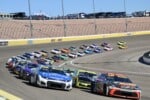
The Next Gen car provided the illusion of closeness. Three cars were under a blanket, and the second- and third-place cars crashed in the final corner in a last-ditch effort to win. On paper, it’s a classic finish that people would look fondly upon, but the finish loses all of its wow factor when it’s a story that’s been drawn out time and time again with the exact same result: a slower car uses clean air to block a faster car and win.
The last three months have seen nearly a half-dozen of these finishes. At Chicagoland, Christopher Bell caught Briscoe in the closing laps of the race but was unable to get by. In the Brickyard 400, Bell and Joey Logano were stuck in Corey Heim’s wake and they could only watch as he took the checkered flag. At Iowa the following week, Bell — with fresher tires, no less — was stuck in the tire tracks of Ty Gibbs all the way to finish. At Richmond, Briscoe got close to Logano after the final round of pit stops with a faster car but could never make the pass.
Sunday was the latest race where fans were teased with a battle, teased with a pass, only for nothing to happen.
It’s year five of the Next Gen car, and its aero sensitivity hasn’t gotten any better. If anything, it’s gotten worse now that drivers have had time to master the art of mirror driving.
Wallace had driven to within one-tenth of Briscoe on the final run, only for the No. 19 to chop down in front of the No. 23 entering turn 1; the aero sensitivity of the car caused Wallace to lose all his momentum, and he never got that close to Briscoe again.
As long as the leader can guess which line the second-place car will run and block it, their progress will be stalled. A trailing car can’t run up to the bumper of the leading car without hitting the invisible wall of air first.
It’s exhausting.
But what we saw at Las Vegas doesn’t happen every week. The prior race at Kansas Speedway saw Briscoe run down and pass Larson for the lead with 30 to go, and Larson passed him right back with seven to go. We’ve also seen previous generations of cars get blocked in dirty air in a similar manner, most infamously at Kansas in the fall of 2020 with the Gen 6 when Kevin Harvick was helpless in getting by Logano for the final 35 laps despite having a far superior car.
There’s also been battles throughout all of NASCAR history where the leader simply did a masterful job of holding off second place, regardless of the aerodynamics at play.
But the Next Gen car and its clean air woes are ruining these types of finishes. These finishes have become stale, and it’s like questioning whether the art you see online was made by an actual person or AI: did that driver win because they drove a perfect race to keep the competition at bay, or did they only win because of clean air and the limitations of the car?
NASCAR, and sports in general, thrive on unpredictability. But when there is a clear, continued pattern of faster cars using clean air and aero blocking to successfully hold off faster cars at the end of races, the unpredictability is gone, and that is a growing problem that continues to have no realistic solution.


Stephen Stumpf is the NASCAR Content Director for Frontstretch and is a three-year veteran of the site. His weekly column is “Stat Sheet,” and he formerly wrote "4 Burning Questions" for three years. He also writes commentaries, contributes to podcasts, edits articles and is frequently at the track for on-site coverage.
Find Stephen on Twitter @stephen_stumpf
A name and email address are required to post a comment. The email address is not publicly visible or shared. Please keep in mind that comments are moderated according to our comment policy.
Comments are listed in order from oldest to newest. Leave a comment