
Who… should you be talking about after the checkered flag?
On a day where the race was memorable for all the wrong reasons, including a track record 18 cautions, the driver with the best car saw the win slip away on a late pit stop with a two-tire call that could have been four, and a driver who hadn’t seen victory lane in over a year was the one to capitalize.
From the start, the Enjoy Illinois 300 saw on-track incidents bring out the yellow flag to the tune of four times in the first stage, with the first coming just six laps into the event. World Wide Technology Raceway (known to most people as Gateway) has two very different sets of corners, and turn 1 was at the center of many incidents throughout the race stemming from brake rotor failures. If brakes weren’t going south, the field was racing aggressively, perhaps too much so for the situation, which led to even more incidents.
Polesitter Joey Logano was the driver to beat for most of the day, leading a race-high 96 laps.
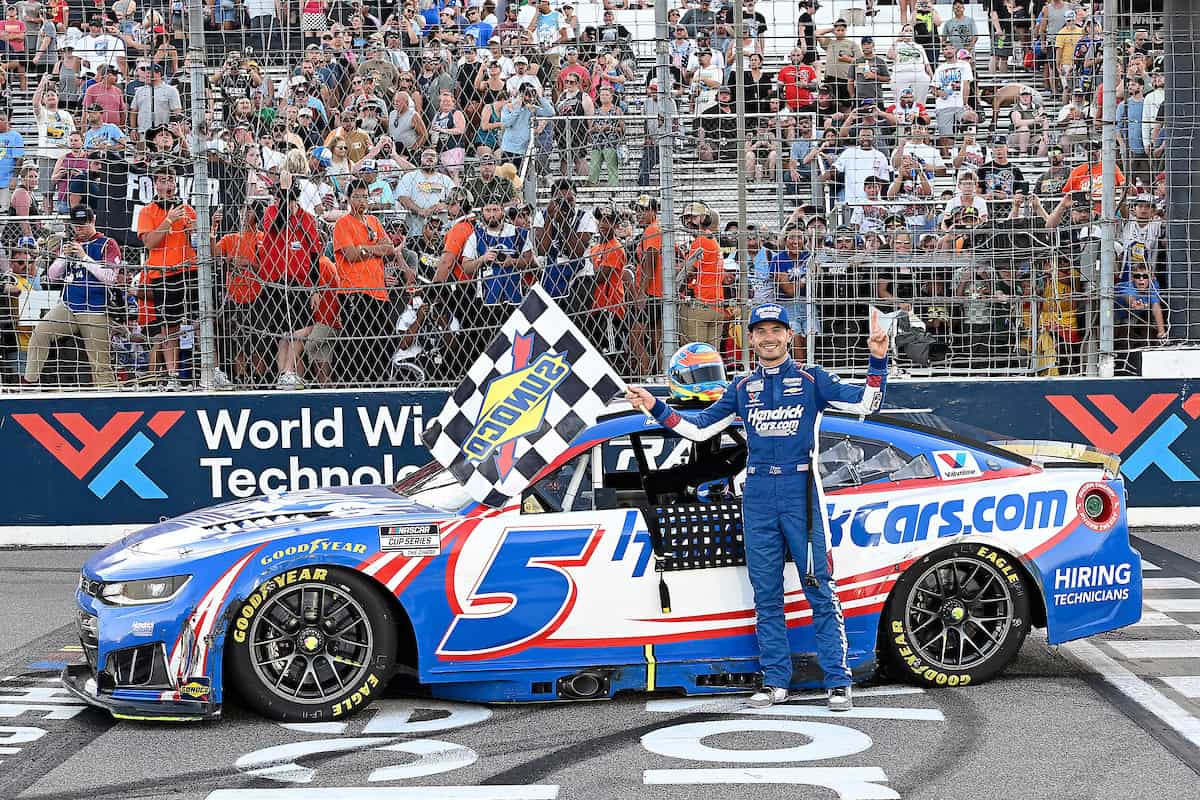
However, a late decision to pit for two tires when most of the field took four and a few stayed on track took away Logano’s advantage and saw a hungry Kyle Larson pounce on the opportunity.
Larson, who led three times for 80 laps, took the lead for the last time on lap 228, surviving more mayhem and restarts before taking the checkers in overtime of what felt more like a prize fight than a Cup race.
It’s Larson’s first win of 2026, ending a drought that went back to May of 2025. It marks the 33rd win of his career and first at Gateway.
On the other hand…
For a lot of the Chase field, it was not a good day. Five contenders didn’t finish the race, the victims of crashes or brake failures. Several of the race’s 17 for-cause cautions were due to brake failures, and most of the others were caused by tight racing on restarts and drivers getting in over their heads too quickly for their spotters to respond.
Ryan Blaney suffered a brake failure that saw his rotor explode through the hood of his car, and in terms of points, took the biggest punishment of the day, finishing 35th. Chase Elliott and Chase Briscoe inadvertently choreographed an all-Chase crash and finished 31st and 32nd, respectively.
Other Chase drivers suffering the Gateway curse were Daniel Suarez, who was collected early and never recovered, and Chris Buescher, who also suffered brake issues.
What… is the big question everyone should be asking after the race?
In a time when the race cars are more durable than ever — and we rarely even see engine failures in Cup competitio — it’s been noted that mechanical attrition, and the drama it can bring to a race, was part of the game for a long time, and the almost complete lack of it has actually hurt the competition. A low DNF number was once almost as integral to a championship as winning races. Being in it at the end meant gaining at least a few points on those who weren’t.
Sunday’s race found mechanical issues front and center as multiple brake failures contributed to a number of incidents that saw nine teams pack it in before the checkers. While that kept the Chase drama flowing, it did nothing for the actual race. So, how much attrition is too much?
On-track incidents were at a ridiculous number on Sunday, and a good deal of them happened due to the brake rotors overheating and warping, causing them to eventually crack and break. Did that contribute to the drama, particularly for the Ford camp who suffered the most of them?
Yes, but not in a good way. Multiple cautions wreaked havoc with teams, strategies and the race in general. Eighty-seven of what ended up being 247 laps were run under caution.
“Good” attrition might send a team to the garage with an issue, and it might cause a caution for fluid cleanup. It has teams questioning strategies and fans anxious about who might be next. This was … not that. This was a wreckfest caused, in part, by part failures.
Where… did he come from?
During The Chase, drivers not in contention for the title have to insert themselves into the conversation in order to be heard above the championship buzz. On a week where several Chase drivers fell out of the discussion early on and others barely worked their way in, four non-Chase drivers finished in the top 10.
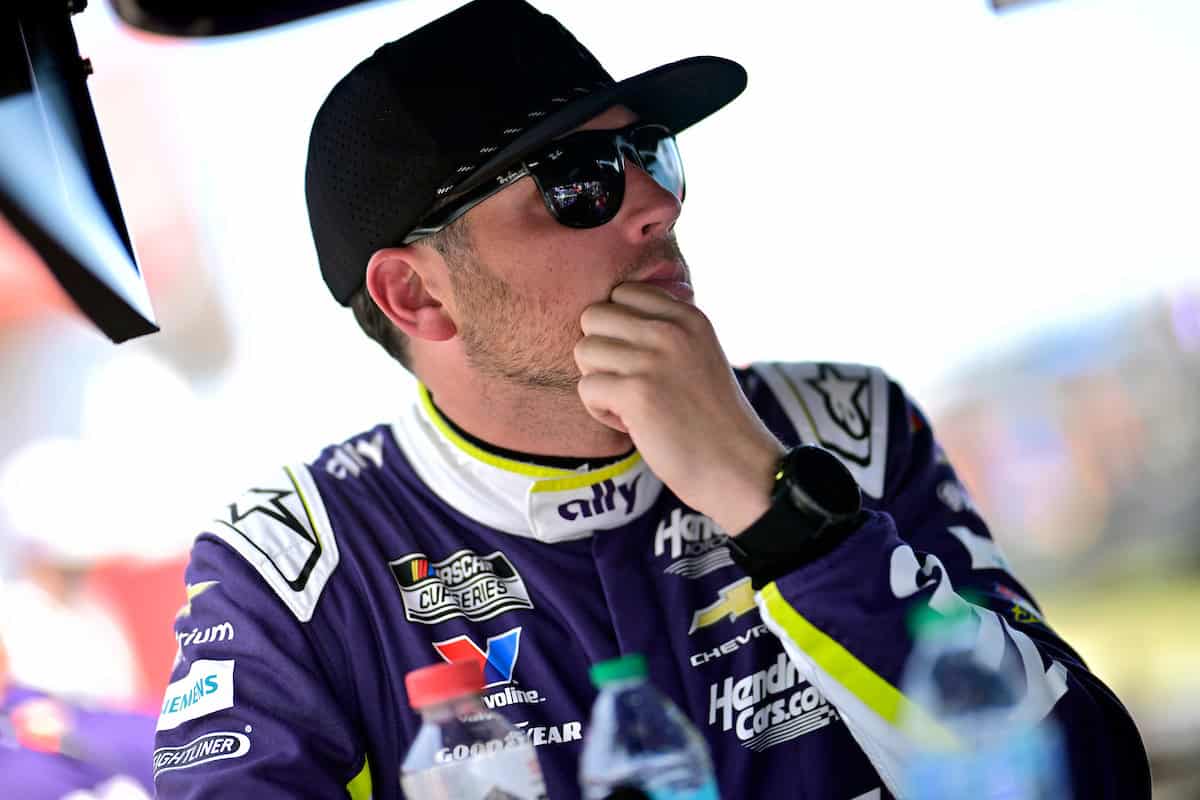
However, it was Alex Bowman, racing with a heavy heart, who pushed his way onto center stage at Gateway. Bowman, who lost his “best friend” dog Finn on Friday, started 11th and drove his way to second. On the final restart, Bowman held off Logano for the runner-up spot on a day where Hendrick Motorsports put together one of its best performances as a whole.
In a tearful post-race interview, Bowman, who missed several races earlier this year due to vertigo and recently announced his retirement after the 2027 season, praised his team, admitting that just getting to the track after his loss was a struggle. The runner-up finish is Bowman’s best result of 2026.
“I had a little extra help today,” Bowman said afterwards.
When… are we going to talk about the points?
Denny Hamlin didn’t get caught up in a crash on Sunday like many Chase contenders, but he struggled to find speed. Hamlin rebounded enough to benefit from the late attrition and finish ninth, which allowed him to hold onto the point lead, but that lead was cut in half again this week and is now just at six points as Larson has entered the picture. Larson moved up five spots and sits second after his win and second top five in The Chase.
Christopher Bell slipped to third after his late crash, 15 behind Hamlin. Blaney (-33) and Tyler Reddick (-42) round out the top five. Ty Gibbs remains sixth, while Logano picked up a spot and is now 51 behind Hamlin (it is an even year). Briscoe, another crash victim, fell three positions to eighth, Carson Hocevar climbed into the top 10 at ninth and Bubba Wallace hung on to 10th.
Elliott, Austin Cindric, Chris Buescher, Ryan Preece, William Byron and Daniel Suarez now line up in 11th-16th.
Why… should you be paying attention this week?
After two different intermediate tracks, the Chase action switches to the high banks of Bristol Motor Speedway for the annual night race. Once the most difficult ticket to find on the Cup circuit, the night race still produces the occasional fireworks, and this week, plenty of drivers will be showing up frustrated after a chaotic Gateway race and a grinding Southern 500 at Darlington Raceway.
Defending race winner Bell enters the weekend looking to rebound from a late-race crash at Gateway.
Hamlin is the winningest active driver at Bristol with four victories. Brad Keselowski and Larson have three apiece.
The top average finish at Bristol belongs to Gibbs, who has a win and an average finish of 11.1 in seven starts, including a triumph in the spring race. Briscoe (11.6), Elliott (13.3) and Hocevar (14) have the best averages among drivers without a Bristol win on their resumes. Briscoe and Elliott have extra incentive after being among the five Chase contenders whose days ended early at Gateway. Buescher is also in that group and has a Bristol victory. Blaney doesn’t have a win but has nine top 10s, while Suarez has the biggest row to hoe to climb out of his Gateway hole, with just two top 10s and a 19.7 average.
How… did this race stack up?
Sunday’s word of the day? Crash.
The first stage provided evidence that cautions do create more cautions. The 45-lap segment featured four cautions for spins, which collected Chase drivers Reddick and Suarez among others.
The second stage didn’t start off much different. Gibbs, frustrated with lack of progress, turned Erik Jones to bring out the first yellow flag in that segment. A few laps after the restart from that incident saw Riley Herbst and AJ Allmendinger go sliding in a chain reaction. If you lost count, that made six cautions for cause in the first 65 laps of the race—plus the scheduled stage break.
It did settle into a better rhythm for most of stage two before a brake failure and a hard crash for Zane Smith ended the stage early. Smith was able to climb from the car but needed assistance afterward.
Brakes were a hot topic in the final stage, as Noah Gragson suffered a hard hit from a brake failure to keep the trend going.
The other issue continued to be cautions breeding cautions like rabbits, and drivers getting into three- or four-wide situations and getting into each other before their spotters could react. Unlike Darlington Raceway, where the Chase drivers dominated the front of the field, the title contenders were not immune to getting tangled in crashes. Only six of 16 contenders finished inside the top 12.
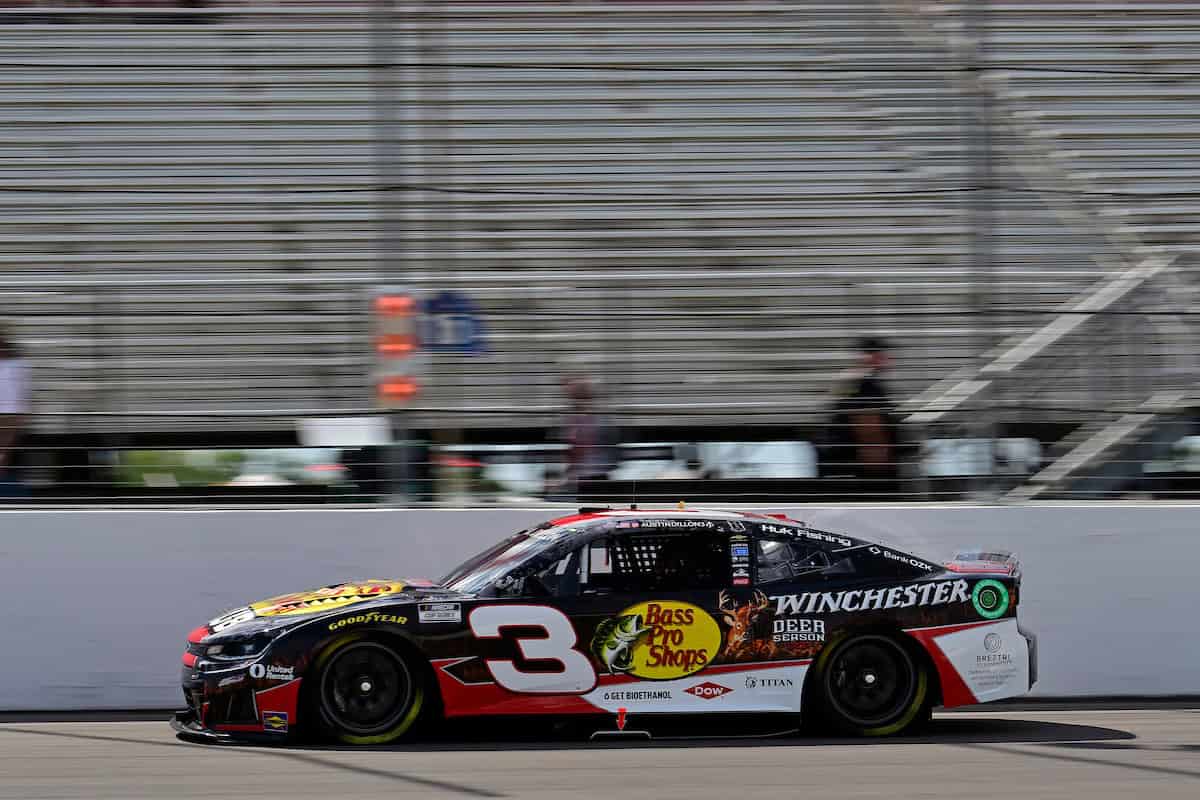
When all was said and done, the race featured 17 cautions for cause, required two overtimes to finish, and despite all of that, felt more like a sigh of relief when it ended than any excitement.
There was action for sure, but a lot, if not most of it, happened on restarts from the multiple cautions. Strategy calls had little effect on most of the race.
Sometimes you just get a dud — and this was one of those times.


Amy is an 20-year veteran NASCAR writer and a six-time National Motorsports Press Association (NMPA) writing award winner, including first place awards for both columns and race coverage. As well as serving as Photo Editor, Amy writes The Big 6 (Mondays) after every NASCAR Cup Series race. She can also be found working on her bi-weekly columns Holding A Pretty Wheel (Tuesdays) and Only Yesterday (Wednesdays). A New Hampshire native whose heart is in North Carolina, Amy’s work credits have extended everywhere from driver Kenny Wallace’s website to Athlon Sports. She can also be heard weekly as a panelist on the Hard Left Turn podcast that can be found on AccessWDUN.com's Around the Track page.
A name and email address are required to post a comment. The email address is not publicly visible or shared. Please keep in mind that comments are moderated according to our comment policy.
Comments are listed in order from oldest to newest. Leave a comment