

Golf has its major tournaments in the Masters, the British Open, the US Open and the PGA Championship.
Tennis has its Grand Slam events: Wimbledon, the US Open, the Australian Open and the French Open at Roland-Garros.
NASCAR has … well, it depends on who you ask.
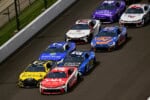
Corey Heim’s win at Indianapolis Motor Speedway in the Brickyard 400 on July 26 took a lot of headlines and made for an interesting conclusion to a weekend that was, to put it lightly, underwhelming in terms of on-track racing.
All the intensity was saved for another annual tradition to rival the Brickyard 400: arguing if the Brickyard 400 is actually all that important.
Surely NASCAR and its top voices did all they could to make the NASCAR Cup Series race at Indianapolis — one that’s been put on the same level as the Daytona 500, Coca-Cola 600 and Southern 500 as the sport’s crown jewels — sound like a big deal, right?
“I don’t think the Brickyard 400 is for the fans,” former crew chief-turned-analyst Steve Letarte said on NASCAR and Motorsport’s Inside The Race. “I think we run all year for the fans. When I walk through the garage area, the Brickyard 400 means more in the garage area than it does perhaps to the fanbase.”
Oh, OK.
While the stands looked sparse on Sunday, it is worth noting that there were still around 70,000 fans at Indianapolis for the Brickyard 400. It’s also worth noting that those people also probably paid a lot of money to go see that race. If NASCAR would like to see those stands filled up a bit more, it’s probably not in the best interest of NASCAR to have broadcasters saying, “Hey, this doesn’t really matter to you a lot, right?”
Letarte does make it a point not to disparage Indianapolis, as does co-host Kyle Petty, who credits it with being responsible for why there’s any type of major auto racing in America. But his argument against it being a crown jewel is that while it may be rich in sports history, it’s not rich in NASCAR history.
“Is it big to race there?” Petty said. “It is, but only because it’s Indianapolis. Only because of the history that [the NTT] IndyCar [Series] has created there, that Mario Andretti, Troy Ruttman, guys like that created. It’s not big for me. I didn’t see Lee Petty win here or Buck Baker or Junior Johnson.”
It’s worth mentioning that Lee Petty won two NASCAR races in Kyle’s lifetime — one when his grandson was 1 month old and another when he was 5 months old. Yes, fans would love the sport to go back to its roots. No, we can’t literally go back to places like Heidelberg Raceway where Kyle watched his grandfather win in July 1960.
Why? It’s a shopping center now. Greenville-Pickens Speedway is an industrial park. Langhorne Speedway is a Sam’s Club. There’s a housing development on the track where Lee Petty won his last race, and Wendell Scott won his only race, Speedway Park in Jacksonville, Fla.
So much of the history of motorsports in this country has been replaced by restaurants and strip malls and data centers, but Petty doesn’t feel a race at one of the oldest tracks in the world is important because we didn’t show up until the ’90s? If that’s how he feels, why would a newer fan feel bad for tuning out on Sunday? How would they feel if they stuck it out through a boring race and then got told it’s not that big of a deal to NASCAR?
No, the biggest and most prestigious events of the year are reserved for NASCAR’s bread-and-butter tracks.
“That’s their hallowed ground, Daytona [International Speedway] is ours,” Petty said.
Is it?
There’s no arguing NASCAR’s biggest event is still the Daytona 500, the only one on the schedule that gets three months’ worth of buildup and nearly the national attention the Indy 500 gets, regardless of the outcome. However, the state of superspeedway racing — not just with the Next Gen car, but really over the last decade — has created frustration among the drivers and the fan base.
Tony Stewart said in 2025 on Rubbin Is Racing that it doesn’t mean as much to win it anymore because, “you look at some of the guys that won the Daytona 500 … and that’s all they’ve won.”
You might say that’s sour grapes from a guy who never won the Daytona 500, but what about a guy who’s won three?
“I worked so hard to work on my craft at all types of racetracks, and I spent so many years growing up just trying to get better,” Denny Hamlin said after the 2025 Daytona 500 on his Actions Detrimental podcast. “But times have changed. And I find myself in this position where it’s like, are we now going to start viewing the Daytona 500 winners like we question our champions?”
Then there’s the Coca-Cola 600, made prestigious by both its location in the center of NASCAR country at Charlotte Motor Speedway, its date on Memorial Day weekend, and for being the ultimate endurance test for drivers and their cars. It’s also, over the years, become an endurance test in fans’ patience. The 2022 running featured two overtime finishes and was the longest race in NASCAR history by miles (619.5) — a record that had been set in the same race two years prior — and just 46 seconds short of being the longest Coke 600 in history. Two years later, the track decided to call the race after making fans sit around for two hours in a rain delay.
Fittingly enough, the topic of the week at Indianapolis for the drivers was races being too long and needing to consider the attention span of the audience. If NASCAR sees that 400 miles at Indianapolis bored fans to tears, would it dare consider trimming the fat on a race for which the distance is a big part of the prestige?
Then there’s the Southern 500, NASCAR’s oldest superspeedway on Labor Day weekend that turns back the clock on the sport. Sort of. Kind of. It used to be designated as a throwback weekend. Then it lost its luster and got moved to the spring Darlington Raceway date before being forgotten altogether as now paint schemes change every week anyway. But hey, at least it’s stuck to its traditional date — for a decade. The race got bumped to November in 2004, then moved to Mother’s Day weekend and got renamed with Dodge sponsorship altogether for a period before finally moving back to Labor Day in 2015.
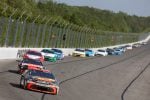
Like its Indianapolis counterpart, the Southern 500 has needed to be propped up by something else. For Indy, it’s the In-Season Challenge finale. For Darlington, it’s either been the regular-season finale or the start to the playoffs. All of these races in recent years have had playoff-picture implications attached to them and have been hammered into fans’ heads to the point that it draws groans.
Weirdly, the questions “Why do we even care about what NASCAR’s crown jewel events are?” and “Why are lung cancer deaths so high?” share the same answer: Big tobacco.
Before the 1985 season, Winston made two major additions to the Cup Series as its title sponsor. One was the introduction of the Winston Million, a big money bonus to be given to any driver who won three of the four biggest events in NASCAR.
The four marquee events at the time were the Daytona 500, the Coca-Cola 600, the Southern 500 and the Winston 500 at Talladega Superspeedway. Why? It was the fastest racing on the calendar and had Winston as a sponsor.
Then the series went to Indianapolis in 1994 and it took Talladega’s spot. What did Talladega do that diminished its prestige? Nothing, there was just more money elsewhere.
Now, the Indianapolis well is drying up, and the sport feels like it’s thin on places where it’ll generate that kind of excitement, prestige and, most importantly, revenue.
Fittingly, Winston’s other big addition in 1985 was the introduction of the All-Star Race, an institution of the sport that NASCAR decided needed fixing and now feels broken beyond repair.
The answer to fixing the All-Star Race and its crown-jewel conundrum might be the same: Do away with both and come up with something new.
NASCAR has made an honest attempt in recent months to repair its relationship with the fan base by actively listening to them. If it were to ask its fans which events and tracks mattered most to them, the answer it’d likely hear is all of them. To a fan in New England, a race at New Hampshire Motor Speedway might trump the Southern 500. To a fan in California, Sonoma Raceway might be their Brickyard 400.
The races at the Indianapolis road courses may not have meant the same to Michael McDowell as a Brickyard 400 win, but whoever can claim to be McDowell’s biggest fan might beg to differ. NASCAR might never go back to Jacksonville, but it’ll always mean something to the families and fans of Petty and Scott.
Maybe instead of propping up events or trying to dim the light on others, NASCAR, its drivers and the media should focus on making every event feel special and important to fans. Just like that first Brickyard 400. Just like the last race at Speedway Park.


James Krause joined Frontstretch in March 2024 as a contributor. Krause was born and raised in Illinois and graduated from Northern Illinois University. He currently works in Fort Wayne, Indiana covering minor league, college and high school sports. Outside of racing, Krause loves to keep up with football, music, anime and video games.
If longevity is a criterion, then Martinsville, The Rock, ‘Darlington and North Wilkesboro are the tracks with Nascar history. Not Indy. ‘Crown Jewels’ is an arbitrary title, meaning nothing. The Winston Million gave meaning…winning them gave you a big payoff…and not just finishing ahead of one driver in a random seeding. Different tracks will have different meanings for different drivers. Do we really need an official designation?
I would want to see Majors feel Special again (IE, Saving your Builds for the Firecracker or Brickyard 400’s) among other things. I would like to see Someone lay Strategy on me a la Eddie Cheever without Muppets.
Smoking rates have declined since the year 2000 but lung cancer rates remain the same.
Don’t blame Big Tobacco to get your snarky point across.
I like the Brickayd 400 and agree with Letarte on that point.
I don’t care about “crown jewel” events. From a NASCAR perspective, it’s a silly marketing term, first applied well within my lifetime. Stock car racing at Indy stinks, and has been processional since the inception of NASCAR running the track. Putting lipstick on the pig that is NASCAR on the IMS oval doesn’t change this.
Poll NASCAR fans about tracks they enjoy being on the schedule, and I’d bet Indy will be near the bottom, possibly at the very bottom.
I agree with Tony Stewart about Daytona and the other drafting tracks…I still watch and enjoy Daytona because it does have a storied NASCAR history (unlike Indy), but winning Daytona doesn’t mean what it once did. Skill matters little. Luck is the primary determiner of who gets to the checkered flag first.
NASCAR’s product is racing. The product does well when the racing is good. All the marketing buzzwords and PR propaganda are meaningless when the product itself sucks.
NASCAR isn’t listening and the media continues to blame the fans for a crappy product.
Fix the product.
The Crown Jewel deal is for the media to have something to talk about and for the drivers to have another feather in their cap. The fans barely care.
If there must be four races to designate as “The Crown Jewels”, let drivers, past and present vote on it. What tracks do drivers most want to say they’ve won at?
If they think Indy is one of the four then so be it. Fans shouldn’t care about such a silly designation, we just want a good race no matter where the track.
They are called majors in other sports. Golf, you have The Masters, The Open, PGA Championship British Open. Tennis, French on clay, Wimbledon on grass, Australian and Open in New York. All intriguing to those that follow those. Only major I can think of in Nascar is Daytona 500. Anything else?