
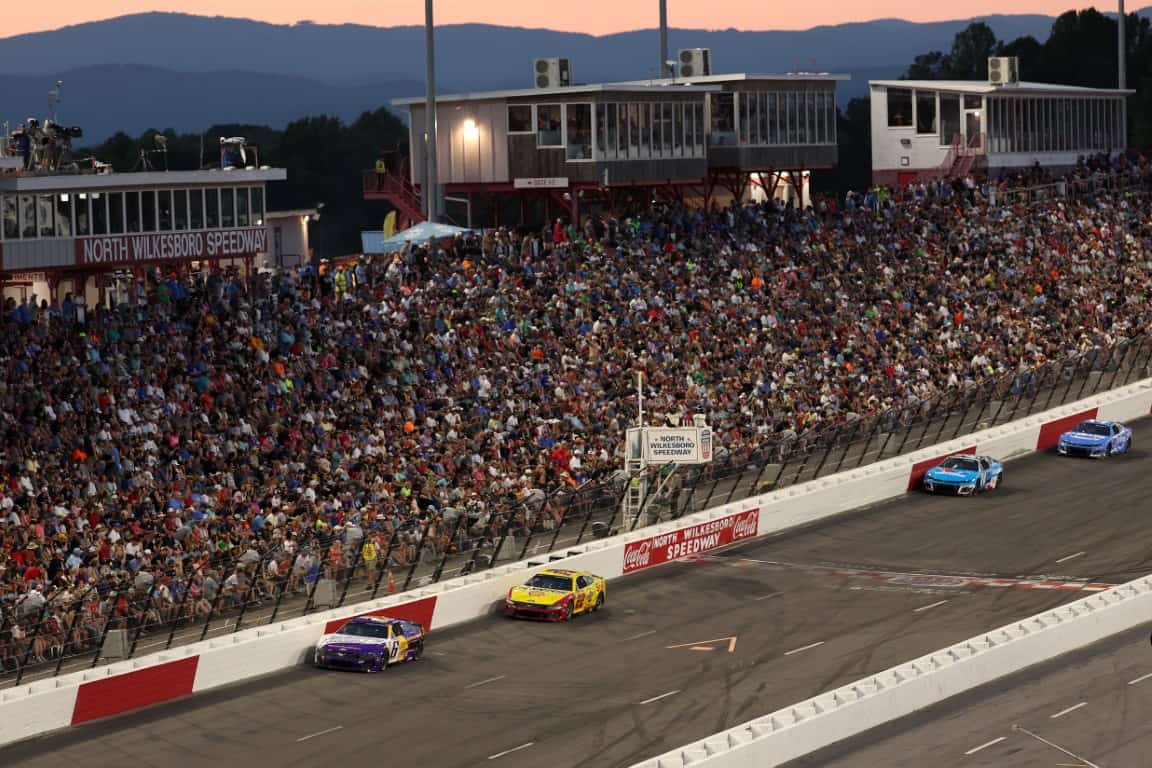
North Wilkesboro Speedway is set to host its first NASCAR Cup Series points-paying race since 1996 this weekend. The event marks another milestone in the revival of one of stock car racing’s most historic tracks, but it also raises the question: Was investing public money into bringing the historic track back the right decision?
For nearly five decades, North Wilkesboro Speedway was a fixture on the NASCAR schedule. The .625-mile oval started as a dirt track before being paved in 1957 and played host to many NASCAR Hall of Famers. The track predates NASCAR itself, opening in 1947 and appearing on the inaugural NASCAR schedule in 1949. North Wilkesboro had connections to the bootleggers and moonshiners who helped shape the early days of stock car racing and represented the sport’s roots.
However, NASCAR’s priorities shifted in the 1990s. As the sport expanded into larger markets, including Texas Motor Speedway in the Dallas-Fort Worth metroplex, new facilities offered modern amenities, greater corporate opportunities, and access to growing population centers.

North Wilkesboro did not fit into that vision. Located in the rural foothills of the Blue Ridge Mountains, the track did not provide the same market opportunities as newer facilities in major metropolitan areas. After the 1996 season, NASCAR removed North Wilkesboro from the Cup Series schedule, much to the frustration of the Wilkes County community. For many residents, the decision mirrored a familiar issue that rural communities face: important industries and parts of the local economy and identity moving toward larger, more populated regions.
For the next several years, North Wilkesboro remained mostly abandoned and fell into disrepair. There was a brief attempt to revive racing at the track in 2010 and 2011 when the speedway hosted the USARacing Pro Cup Series, but the effort failed to create a sustainable future for the facility.
The first major step toward the track’s eventual comeback came in 2019, when Dale Earnhardt Jr. and a group of volunteers helped clear the overgrown facility so it could be digitally scanned for iRacing. The project led to renewed interest in the track and a desire to see racing return.
In 2021, that renewed interest helped lead to state involvement, as then-North Carolina Governor Roy Cooper included funding in his budget proposal to help revitalize motorsports venues across the state. Through American Rescue Plan funding, $45.8 million was awarded to 17 motorsports facilities, with $18 million going toward restoring North Wilkesboro Speedway.
The funding allowed the aging facility to receive the upgrades needed to host major racing events again. In 2023, NASCAR returned to North Wilkesboro for the first time since 1996 with the NASCAR Craftsman Truck Series and the Cup Series All-Star Race. Since then, the track has continued to host NASCAR events along with multiple grassroots racing series.
In a statement provided to Frontstretch by Cooper’s U.S. Senate campaign, Cooper said, “Bringing NASCAR back to their homes, North Wilkesboro and Rockingham Speedways, has provided a huge boost to our economy and given North Carolinians more chances to watch this great sport live right in our home state. Motorsports are an important part of our state’s identity, and I’m proud of our bipartisan work that went into revitalizing these two historic venues.”
North Wilkesboro was not the only historic NASCAR venue to receive state funding. As Cooper mentioned in his statement, Rockingham Speedway received $9 million from the state to help repair the facility, which had sat dormant since 2013.
A private investment group purchased Rockingham Speedway in 2018, and state funding helped complete major improvements, including resurfacing the track. Those upgrades allowed NASCAR to return to Rockingham in 2025 with the NASCAR O’Reilly Auto Parts Series and Craftsman Truck Series.
So, was public funding the correct way to bring these tracks back? Well, the economic impact would indicate that the funding has paid off.
According to Spectrum News, the 2024 NASCAR All-Star Race at North Wilkesboro created 625 jobs for North Carolinians, increased the statewide economy by $42.4 million, and attracted fans from all 50 states and internationally.
For Wilkes County, the race generated $20 million in direct construction and infrastructure investment and nearly $29 million in visitor spending.
Rockingham produced similar results. According to an article from the Richmond Observer, the Pinehurst Southern Pines and Aberdeen Convention and Visitors Bureau reported that the 2025 NASCAR weekend generated nearly $40 million in economic activity between Richmond and Moore counties. Moore County accounted for $28 million of that impact, while Richmond County saw $11.8 million.
Despite the success, it is still fair for a fiscally-concerned individual to ask if it was an appropriate use of public funds. After all, in the modern United States, no matter your location, it does not take long to look around and think of an issue that deserves attention.

The reality is that there are few issues within government that do not devolve into fighting, not only along partisan lines but within parties as well. Many ideas sound great at first but reach a roadblock when conversations turn to the logistics of how they will actually get done. How will they be funded? Who will be responsible for overseeing them? And will they produce adequate results? The revival of North Wilkesboro and Rockingham was different because the investment had a clear purpose: restore existing facilities, bring events back to the communities and create measurable economic benefits
The location of the investment is also an important part of the discussion. As mentioned earlier, North Wilkesboro’s removal from the NASCAR schedule reflected a familiar trend in rural communities where an important part of the local economy and identity moves toward larger, more populated regions. While many major development projects take place in metropolitan areas, North Wilkesboro and Rockingham are within smaller communities that are often competing for the same resources. The funding helped direct economic activity toward areas that do not always receive the same level of investment.
Ultimately, the answer to the funding question should rest on whether the return of these tracks was a net positive for the people of North Carolina and the communities surrounding them. The benefits of bringing these tracks back extend beyond racing itself. North Wilkesboro and Rockingham have provided economic opportunities for the areas surrounding them through jobs, infrastructure improvements and tourism spending. If the goal of the public funding was to strengthen these communities, then the results suggest the investment succeeded.


Logan Kendall joined the Frontstretch team in 2025 as the Tuesday news writer and eventually branched out into assisting with Frontstretch's social media and video team operations as well. Outside of motorsports, he has an interest in history, meteorology, and government.
Big money was spent buying these tracks, along with lawsuits, in order to obtain those coveted race dates. Once the race dates were sold, the tracks became worthless.
Nostalgia plays a big part among fans trying to recapture the good old days of NASCAR. Those days are long gone. But, it’s a good marketing tool. I have my doubts the economic impacts were worth the investments made.
It’s too easy spending someone else’s money and walking away when it’s gone. We’ve been there before. It’s a business model I don’t understand.
I don’t know if it was good investment of taxpayer money or not. Time will tell.
As opposed to bankrolling welfare, corporatism, political slush funds, illegal & unconstitutional foreign wars, etc, yeah as a taxpayer I’m good with it.
Feels good to help the middle class with these tax-payer dollars