This article is posted in collaboration with an outside partnership client. The opinions and information contained within do not necessarily represent Frontstretch and its staff.
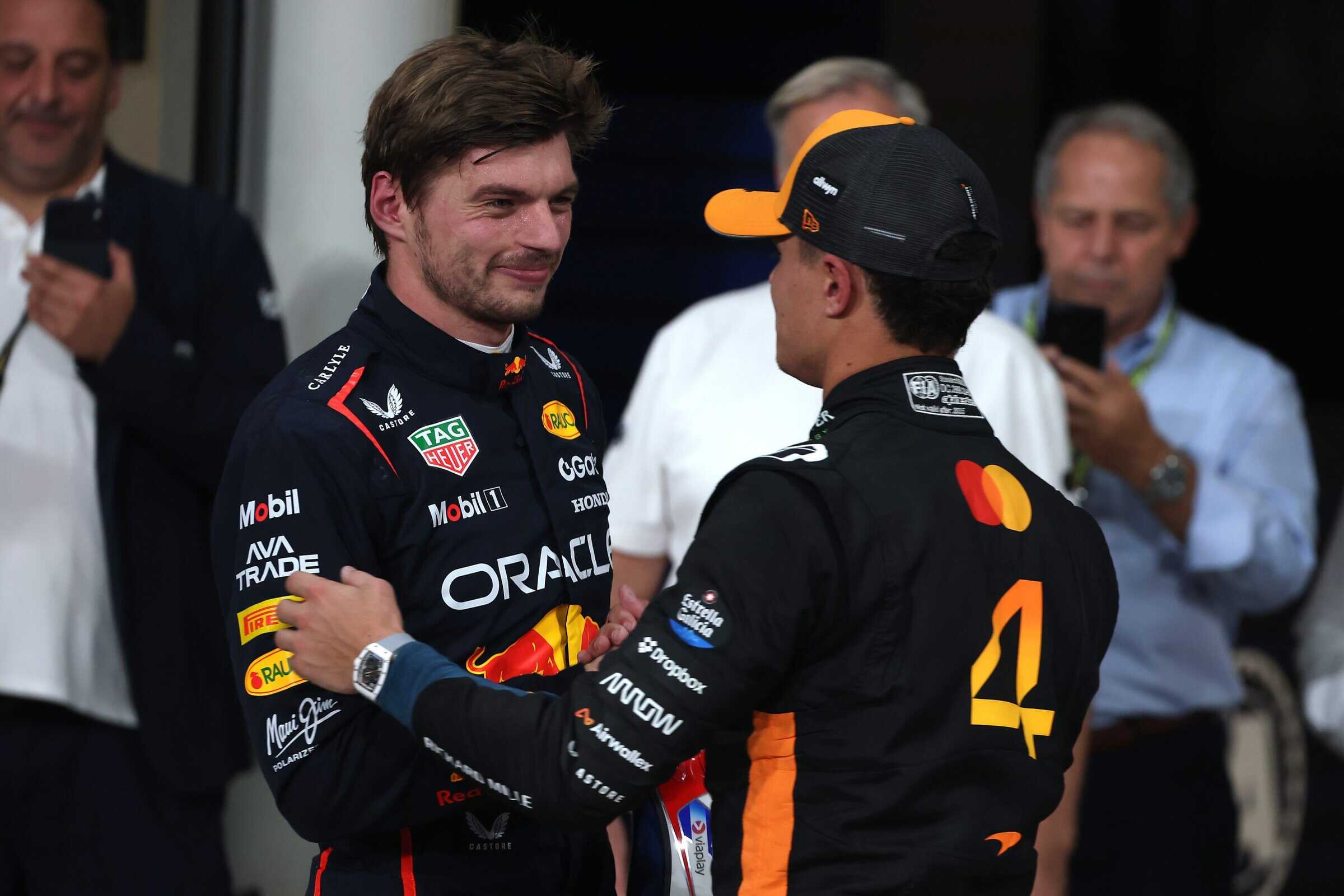
Max Verstappen called the new F1 regulations “anti-driving” after the Japanese Grand Prix. This came after he’d already labelled the new cars “Formula E on steroids” during winter testing, and called the whole experience “a joke” at the Chinese Grand Prix.
These aren’t comments from some frustrated pay driver at the back of the grid. This is coming from a four-time world champion, who’s now ninth in the standings with no podiums after three races.
Verstappen is in the absolute prime of his career at 28 years old. And yet he’s openly questioning whether he wants to be here next year.
The timing couldn’t be worse, with Miami just a few weeks out. Montreal’s Canadian Grand Prix is just around the corner in late May too, so betting interest from the North American market is on the rise.
Fans have been flocking to review sites such as mansionbet.com in Canada to decide where they’d like to do their betting this year. Yet one of the sport’s biggest stars is questioning the on-track product.
That’s not a good combination.
What’s Gone Wrong
The 2026 power units split output 50-50 between the internal combustion engine and electrical power. MGU-H was removed and battery output nearly tripled, with sustainable fuels and active aerodynamics added on top.
All of this is progressive on paper, sure. But in practice, drivers have to go off the throttle mid-corner to manage battery deployment, or they enter “super clipping” where the throttle’s wide open but the car slows because it’s recharging.
Qualifying is where this is most obvious, as no drivers can do a flat-out lap anymore. That used to be what F1 was all about: a driver pushing a car to its absolute limit.
Then Suzuka happened.
Bearman’s Haas was deploying while Colapinto’s Alpine was harvesting — roughly 55 km/h between them — and Bearman ended up in the barriers at 300 km/h. Suddenly the conversation switched from feel to something even more important: safety.
Domenicali the Politician
F1’s CEO has been trying to hold things together over the April break.
In an interview with Autosport, he tried to walk a fine line between acknowledging concerns and insisting things are heading in the right direction. He also warned Verstappen that a four-time champion’s words can get taken out of context, and used an Italian proverb about the neighbor’s grass always appearing greener, which was obviously pointed at the retirement talk.
But he also confirmed Verstappen attended a recent FIA technical meeting and was “very keen to give suggestions.” So this isn’t a total breakdown, just more of a public negotiation.
Domenicali can point to his numbers — overtaking is up, attendance is up across three sold-out races in Australia, China, and Japan — and argue the product is working.
Equally, Verstappen can point to the driving experience and argue it isn’t.
Where Would Verstappen Go?
Verstappen’s Red Bull contract is until 2028, but reporting from ESPN and European outlets has confirmed there’s an exit clause based on championship position. If he’s not in the top two by the summer break, he can bail.
Then there’s Gianpiero Lambiase, his race engineer, who’s leaving for McLaren as Chief Racing Officer. Could Verstappen follow him and Piastri head to Red Bull in return? Verstappen has always said he’d follow Lambiase, and McLaren have the stronger car right now, so it’s not out of the question.
Ferrari are watching too. If Hamilton retires after 2027, there’s a seat. Verstappen’s been doing endurance racing during the break; whether that’s a hobby or a planned move, we’ll see.
What’s Next?
Changes to qualifying should happen ahead of Miami.
Domenicali has also hinted that the next rules cycle in five years could look “definitely different.” Sustainable fuels mean we could see V8 engines and a far smaller hybrid element (quite the reversal considering how much went into the current setup).
A lot of this comes down to the car industry going off EVs to an extent, which has changed things for F1 too.
There’s a five-week break before Miami, with a lot of time for conversations to happen. If the tweaks go far enough, 2026 can get back on track. But if they don’t, F1 risks its biggest star walking away.