
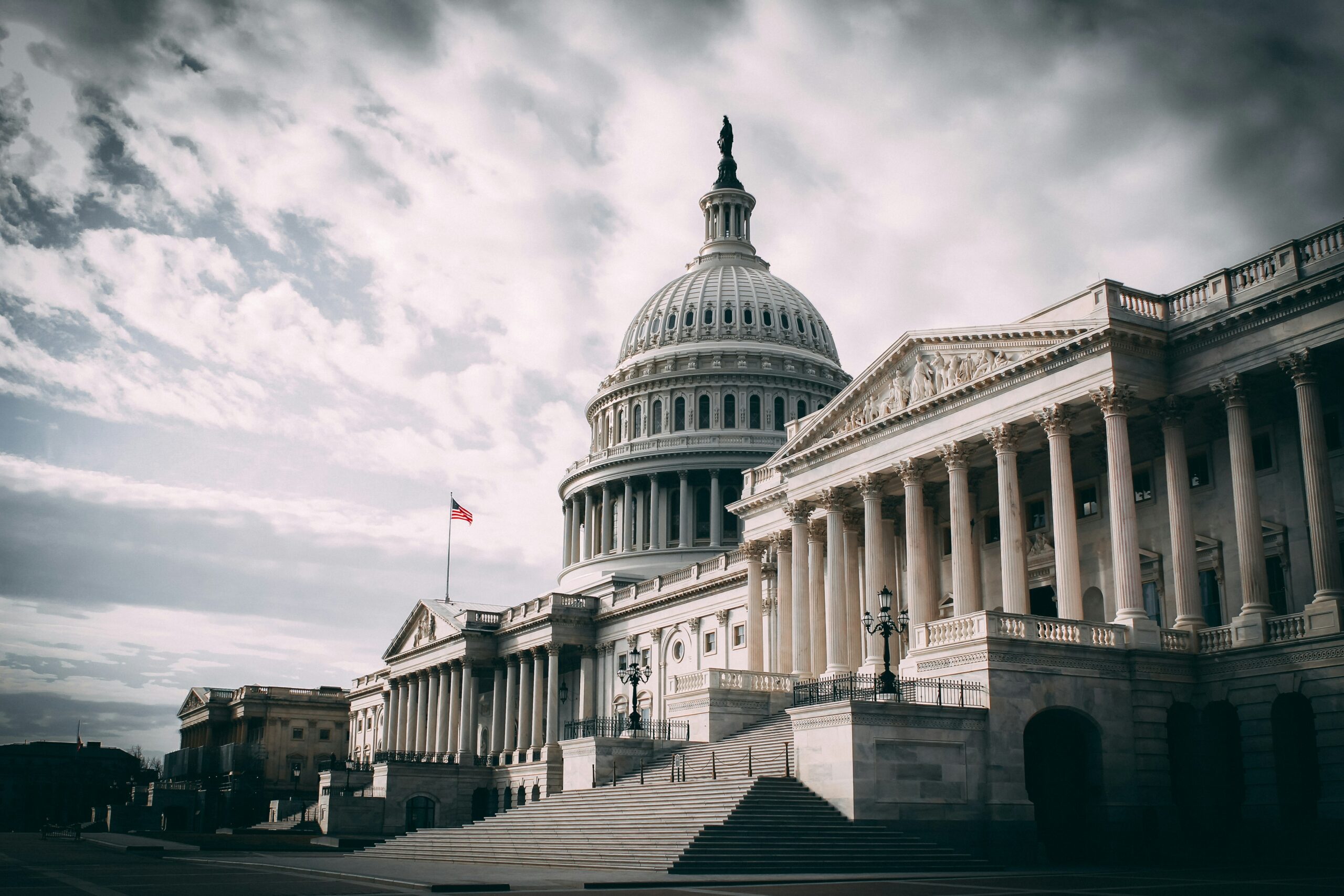
George Washington had an extremely tough task ahead of him.
At some point early in his presidency, he had to figure something out — how to turn the swamps and lowland along the bank of the Potomac River, with swarms of mosquitoes hovering over the vile water and heat haze building, into a vision for the future.
He wanted to build a beautiful capital district for the infant United States of America.
Of course, he didn’t construct the city, and wasn’t the lead designer. As a former surveyor, though, Washington was interested in managing the project as others charted out the district’s boundary and drew up the streets that remain today. Still, he was involved in plotting out how to make untamed land into a bustling national capital.
That was 1791. In 2026, the NTT IndyCar Series and owner Roger Penske are committing to a similar herculean task over the grounds Washington imagined.
This isn’t to build a government center or establish a first-of-its-kind republic. Instead, he is simply trying to establish a race in a city that has never hosted anything like it before. If it is successful and a green flag falls over the nation’s capital for the Freedom 250 in the summer, it will become a remarkable moment in Penske’s time as owner of IndyCar. Or, in the opposite scenario, it will join a list of other street circuits that have failed.
With Friday’s (Jan. 30) announcement of President Donald Trump’s executive order to hold an IndyCar race in August around the National Mall, Penske has awoken the publicity engine for his series in the dead of winter.
It’s hard to write a story about this topic without meandering into politics, so be forewarned. The intent is to stay focused on how this impacts the open wheel series instead of the nation as a whole; if you’re looking for more fire and brimstone on who is right and wrong, head to social media.
Of course, this is familiar territory for American open-wheel racing. Unfortunately, IndyCar’s history has more miles of back-room politicking than any sport in the modern era, so this is child’s play for the veterans of the Civil War (the Split that is). Why be surprised that the series is now wading into actual politics and its raging rapids of public relations with Friday’s announcement?
Taking the Freedom 250 solely as an IndyCar race, it has a lot of potential, and the visuals will easily top Formula 1’s Las Vegas Grand Prix. High-horsepower open-wheel machines screaming past Abraham Lincoln as he stares off in stoic solitude. Alex Palou sets up Kyle Kirkwood through a hard-angle turn in front of the World War II Memorial, before screaming away from under the shadow of the Washington Monument obelisk. Will Power drafts off of Pato O’Ward down a short straight drive along the awe-inspiring Constitution Avenue with the ghosts of the 58,276 names on the Vietnam Veterans Memorial Wall watching on.
I know the Indianapolis 500 is the Greatest Spectacle in Racing, but a street course in Washington, D.C., that’s like the Greatest Privilege in racing, right? Championship car racing and the Indianapolis Motor Speedway have so much connection to this nation’s foundation that it makes sense for them to be the show in the district.
Carl Fisher’s vision for the Speedway as a testing ground for the fledgling automobile is rooted in the American quest for opportunity. Eddie Rickenbacker was a World War I fighter ace, combat veteran and businessman when he assumed ownership, seeing potential for racing heading into the Roaring Twenties.
Then there was the rise of championship car racing during the post-World War II time period, led by drivers shaped by global conflict. They were men with broken fingers, visible scars, and oil-stained trousers that became heroes to people in wooden seats. The fields were full of different backgrounds, cultures and homelands, merged together by a desire to go fast and win. If not for a European war and its aftermath, who is to say the Andretti family doesn’t hop on a boat and head to America, searching for a new life unhinged from the whims of dominant forces? Or a businessman in Terre Haute buying a run-down racetrack, ignored after Dec. 7, 1941?
Realizing how deeply IndyCar’s lineage is tied to the persona of the United States, no other series in the country deserves the honor of putting on the first motorsport race in D.C. What a great story there is in sending the stars of the Indy 500 to compete over such hallowed ground, during the United States’ 250th birthday.
That’s the rub, though. The timing of all of this is so hard to put into words.

Turn on the news, look at the feeds, or even gather around a dinner table with friends, and it doesn’t take long to learn our country is in turmoil. Regardless of sides, there is angst amongst groups of people against one another, and that has turned the last year-and-a-half in Washington into a telenovela.
Social media is ablaze, cable news is reeling in viewers any way it can and streets are filled with those for or against whatever issue rages on that day.
It’s like that seesaw you rode as a kid, except your older brother never let you get off and kept going until you got sick.
So, naturally, IndyCar decides to jump right into the middle of this.
From the start, this is a massive uphill climb for Penske Entertainment to pull off. The announcement included a date, a general location, and a name. The rest of the details will be forthcoming, which leaves a lot of questions. Can a race circuit be designed quickly enough, the logistics worked out in staging everything from practices to post-race celebrations, and infrastructure put in place?
These items are usually done a year in advance of the main event to ensure all preparations are made. IndyCar has seven months. Penske is a smart businessman, though. He purchased the Long Beach Grand Prix in 2024, therefore bringing in-house the experienced staff that has put on the most successful street-course race in U.S. history. Penske Entertainment has also led the way in Detroit, at two different city venues, so that also helps. They aren’t going to be novices at making a new event work.
But that begs the question, then, who is going to promote the race itself? Is Penske Entertainment involved, or is this going to be led by an external entity, such as the government and its Freedom250 organization? If it’s an outside promoter, then that’s where things get dicey.
When others outside the series run these events, the history is filled with faltering and short-lived races, with follow-on public relations headaches ensuing. The long list of various circuits could be put on an IndyCar Street Course Memorial in the National Mall: Baltimore, Sao Paulo, Edmonton, Houston, and most recently, Nashville. Then there is the failure-to-launch category: China and Boston. What’s not listed is all the tracks lost in the Champ Car era, when there were more Festivals of Speed before the merger in 2008, or cities that never found the cash.
Each one of the above cases fell apart due to a promoter losing government support, too much money, or a battle with the law — Boston, for example. Shaking hands and getting dollars in hand for a brand new, shiny street course event has a short honeymoon period.
Then again, none of them had the backing of the federal government like the Freedom 250. President Trump ordered this race to happen, so that makes things seem certain just because ample resources are available.
Which is where this can really go wrong.
In a sport that needs fans to buy tickets, show up at races in t-shirts with drivers on them, and buy up memorabilia, the federal government being the promoter, heck, just involved, for the event might trigger some feelings.

This can’t be ignored. On Jan. 24, Alex Pretti was killed in Minneapolis by federal government agents. People are mad. A line has been engraved in the asphalt of political opinions, and sides have built fortresses reinforced by cold, hard rhetoric to defend their views. Emotions are high.
A week later, Penske stands with President Trump in the Oval Office to announce a new event that will ensure IndyCar has five straight weekends on network television to finish the year. He is putting his series in an untapped open-wheel market and is bumping the number of races from 17 to 18. All of this meets the demands of fans.
But the reaction to the news was not all cheers and applause. The social feeds were as political as the sport has ever seen — more so than the Speedway Slammer announcement last year.
This is very confusing to supporters of the series. Fans are in the middle of a rock and a hard place. Do they root for their sport, one that must sell tickets to make ends meet, or stand for their opinions if they are feeling caught up in the political climate? It’s their right to do whatever they want and there is no wrong answer. After all, sports are to help people escape the realities of life sometimes. But adding in this additional layer of decision-making will make an event already tough to pull off even more of a battle.
It’s a shame. The event can be something the series can leverage to increase its growing momentum. New races like this always sell well, at least the first year, and celebrating the country’s 250th birthday is similar to the emotional pageantry and ceremonies of Memorial Day weekend in Indianapolis. IndyCar can absolutely knock the spectacle of the Freedom 250 out of the park.
But can the series make it happen? It’s a short window, there is a lot of emotion wrapping around everything going on in Washington, and IndyCar’s history of having big dreams at new city street courses hasn’t always measured up against the harsh reality.
Will the race be the next big thing for IndyCar, or another tough task that they can’t pull off?


Tom is an IndyCar writer at Frontstretch, joining in March 2023. Besides writing the IndyCar Previews and frequent editions of Inside IndyCar, he will hop on as a fill-in guest on the Open Wheel podcast The Pit Straight. A native Hoosier, he calls Fort Wayne home. Follow Tom on Twitter @TomBlackburn42.
I wonder how many ICE agents will be there
They’ll be the ones wearing masks.
Tom, great job toeing the line here, informing without taking a side. The DC race is both inextricably intertwined with politics, and crucially relevant to Indycar, and by extension, most auto racing in the United States. Given the relevance to auto racing, this article absolutely belongs on Frontstretch, written and explained exactly as above, without bias. Just the facts ma’am.
Though by itself this race will likely draw quite good ratings and attendance, I think this is a clear mistake by Penske. Indycar will likely enjoy a short term bump in revenue and coverage, but once the novelty of a DC race wears off, I’d guess they’ll be lucky to break even from the perspective of number of long term fans.
Currently, anything involving politics, much less involving the highest office in our country, is nearly guaranteed to tick off 1/2 of Americans. Companies which have learned this the hard way are myriad, and are nearly evenly split down the middle as to whether they angered the right or the left. No matter which side they angered, the result was a loss of long term revenue.
I wonder if Penske was looking at the crushing wave of negative news and ratings for NASCAR, and was looking for a way to capture some of those disenfranchised fans. If so, again I think this was the wrong way to go about it.
It’s a shame…NASCAR’s well publicized issues, along with F1 moving behind a US pay wall in 2026, seemed to have opened the gates for Indycar to emerge as a reinvigorated force in US auto racing. Had Indycar stayed away from the even louder, even angrier world of modern US politics, it was all there for the taking. As it is, Indycar will likely just exchange some fans for other fans in the long term, as politically, people have long memories these days.
250 years is something to celebrate. NASCAR will race at Naval Base Coronado in June and IndyCar will race in DC in August. I’ll probably watch both races.
See how easy that was.
If you understand why Chicago failed big time, you can predict the same for Washington.
It sure didn’t take long for someone to make the Freedom 250 about politics and not IndyCar racing. I haven’t seen anything tying politics to other America’s 250th birthday celebrations, not the “DC250” events, or Alexandria’s “America’s Birthday Bash”, or Philadelphia’s year long “Philly 250” celebration or the nation wide “America 250” events. Why does Frontstretch feel it so important to try to interject politics into the Freedom 250 only a couple days after it was announced? Why did the writer feel it was so important to bring politics into the race? Why can’t we just enjoy the fact that we’ll get one more race to watch this year? My guess is that if Penske had announced the race alongside of DC’s (democrat) mayor, and without any involvement from Trump, the writer would have found no reason to bring politics into it.
Do I think the event has a long term future, no but then I didn’t consider it to be anything other than a one year only race to be part of the US 250th birthday celebration. I never expect any street course race to have anything other than a short life span, it’s just their nature. I was involved in Trans Am and IMSA racing in the 80’s and I remember all the street courses that came and went. We raced plenty of street courses that only lasted one or two years like the Meadowlands and Niagara Falls. IndyCar abandoned the Mid Atlantic and Northeast region years ago. If DC only hosts the race once it will still be nice to have one race on the east coast this year.
As to whether Trump’s support of the event will “trigger some feelings” in people and effect ticket sales, initial reports on the race claim that general admission to the race will be free.
Exactly, its about the USA’s 250th birthday, nothing more. I’m not a fan of basketball or golf or soccer, but if those sports wanted to hold an extra 250th event, I would fully support them.
No articles about Penske “scandalously” re-hiring Tim Cindric? lol