
1. Toyota Looked Mortal After Kansas
When the 2026 season began, many thought there was no way Toyota would lose the NASCAR Cup Series championship. The Toyotas were by far the class of the field. They were fast on short runs, fast on long runs and could visually corner faster than the other cars. Joe Gibbs Racing and 23XI Racing racked up wins, and even the developing Toyota team Legacy Motor Club saw a vast improvement compared to the previous season. After winning seven of the first nine races, the Toyotas looked unstoppable. So much so that NASCAR took notice.
In mid-July, NASCAR updated its rules regarding a car’s splitter. Teams were required to install rigid struts on the front bumper of their cars to prevent the splitter from flexing. They believed that deformation of the splitter at high speeds could lead to a performance effect, so making the splitter rigid should neutralize that effect.
After a few months of use, we can say that the change worked. In the 10 races since the rule was implemented at North Wilkesboro Speedway, Toyota has only won three times, compared to 12 wins in the 20 races prior.
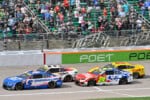
At Kansas Speedway on Sunday (Sept. 27), we saw the change in full effect. At the track 23XI and JGR dominated in the spring, they couldn’t catch Chevrolet driver Kyle Larson.
To be fair, the field reined in Larson on the long run, and JGR driver Chase Briscoe did pass Larson for the lead in the final stage. However, after the final pit stop, Toyota looked uncharacteristically vulnerable, and Briscoe fell into the clutches of the Hendrick Motorsports driver and ultimately fell back to third behind Team Penske driver Austin Cindric.
This was the first traditional intermediate track race since the change, so it is too early to say if Toyota is in trouble. All eyes will be on fellow 1.5-mile track Las Vegas Motor Speedway next weekend to see if the competition gap has truly been minimized.
2. Denny Hamlin Has Been the Most Consistent … But it Might Not Matter
Hamlin is having the best year of his career. Nearly every week the No. 11 is a contender, and the stats show. Last Sunday at Kansas, Hamlin broke the record for the most consecutive lead lap finishes in Cup Series history (29). He leads the series in top fives and top 10s in 2026, and boasts an average finishing position of 8.4, the best of a full-time driver in a season since Hamlin’s 8.4 in 2021.
Alas, Hamlin has taken a hefty points hit since the beginning of The Chase. After starting 25 points ahead four races ago, Hamlin is now 26 behind points leader Larson. The No. 11 team’s finishes haven’t been bad; they did finish 18th at Darlington Raceway but have since scored three consecutive top 10s. Larson has had such a good start to The Chase that Hamlin’s consistency is being overshadowed.
Larson began The Chase 55 points behind Hamlin, outsourcing him by 81 points in the four races since. To win this championship, Hamlin will need to take the fight to Larson.
3. Is the Cup Championship Fight Down to 2 Contenders?
As Larson and Hamlin begin to pull away in points, the amount of realistic championship contenders shrinks. Only four drivers are within a race of the points lead, and only the top 11 are within two races of it. While it looks like this championship has become a two-horse race, a late-season surge is still a possibility from someone outside the top two, but time is running out.
As we said above, Larson made up 81 points on Hamlin in four races. Cutting into a large points gap is doable, even in a short amount of time. For this, I have my eye on Ryan Blaney and Joey Logano. Blaney has won at four of the remaining six tracks on the schedule, and had a points surge of his own late in the regular season. Though 91 points away from the lead, Blaney has time to make one last push for this season’s championship.
Only 67 points out, Logano is one to watch as well. He has cemented himself as one of the best drivers in a “crunch time scenario,” and the No. 22 team is always a factor in the final 10 races.
4. Surprise! Winning Still Matters
When the new NASCAR points format was introduced, we knew teams’ strategies would change as well. A win in the old format meant a lock into the next round of the playoffs, enabling drivers to be more aggressive and go for more wins. This “checkers or wreckers” mindset provided us with many entertaining finishes, but it was about to come to an end. Or so we thought.
Finishing second in a race awards a driver 35 points in the new format, while a win gives out 55. Being aggressive and going for the win could gain a driver 20 points over second, but wrecking from second could lose a driver much more than what they could gain. Last Saturday, Layne Riggs was willing to take that risk.
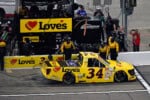
In the closing laps of the NASCAR Craftsman Truck Series race at Kansas, Riggs was situated in second, within reach of race leader and championship rival Kaden Honeycutt. Riggs was driving hard, trying to get past Honeycutt’s No. 11, when he got into the wall twice, causing him to fall back to 19th.
It was an aggressive move that cost him points, but it was justifiable. The difference between first and second is 20 points, and taking away points from the competition is just as important as earning points. Riggs showed that wins are still as important as ever.
5. It’s Refreshing to See a Championship Battle Play Out
All racing purists yearn for a full-season points format, but The Chase has given us a great championship fight. For the past decade under the playoff format, the points standings most weeks didn’t matter. Sure, there were cutoff battles that went down to the wire, or the fight for the regular season championship, but there was no set-up before the final race.
The greatest NASCAR seasons aren’t necessarily the ones with the best on-track racing. They are the ones that tell the greatest stories. Under the playoff format, it was hard to have a satisfying, overarching narrative because it couldn’t be built in real time. Occasionally, the champion, while still deserving, came out of nowhere to win the title. While not the purest way of deciding a champion, The Chase has fixed this problem.
This year’s championship story has been building since the Daytona 500. Toyota dominance turned up the urgency for Chevrolet and Ford, Reddick’s points lead was methodically cut into and eventually surpassed by Hamlin and contenders clamored for a good finish in the regular season standings to get a high seed in The Chase. With no more resets, every race matters.
Larson’s come from behind to take the points lead, while aided by The Chase reset, is something we weren’t able to see in the past decade. Now, it means more. Every race from here on out is going to be a fight between Larson, Hamlin and anyone else who can challenge the top two. Whoever wins this championship will have a season-long résumé. The question that remains is; what story will this season tell when it’s all over?


A name and email address are required to post a comment. The email address is not publicly visible or shared. Please keep in mind that comments are moderated according to our comment policy.
Comments are listed in order from oldest to newest. Leave a comment