
In NASCAR, sometimes more than just the cars go in circles. This year, the NASCAR Cup Series comes full circle as NASCAR re-enters the Chase Era. After 11 seasons of the playoff format, all three national series will decide the championship with a 10-race or seven-race title run. Points will be reset just once, which for Cup comes after the Coke Zero Sugar 400 at Daytona International Speedway. The top 16 in points after that event will race for the big prize.
Entering June, Tyler Reddick holds a 97-point lead over his car owner, Denny Hamlin, in points standings. He’s also got five wins, which will come in handy at the time of the reset as a win is worth a substantial number of bonus points.
Reddick has to be the title favorite, right?
Well, history suggests otherwise.
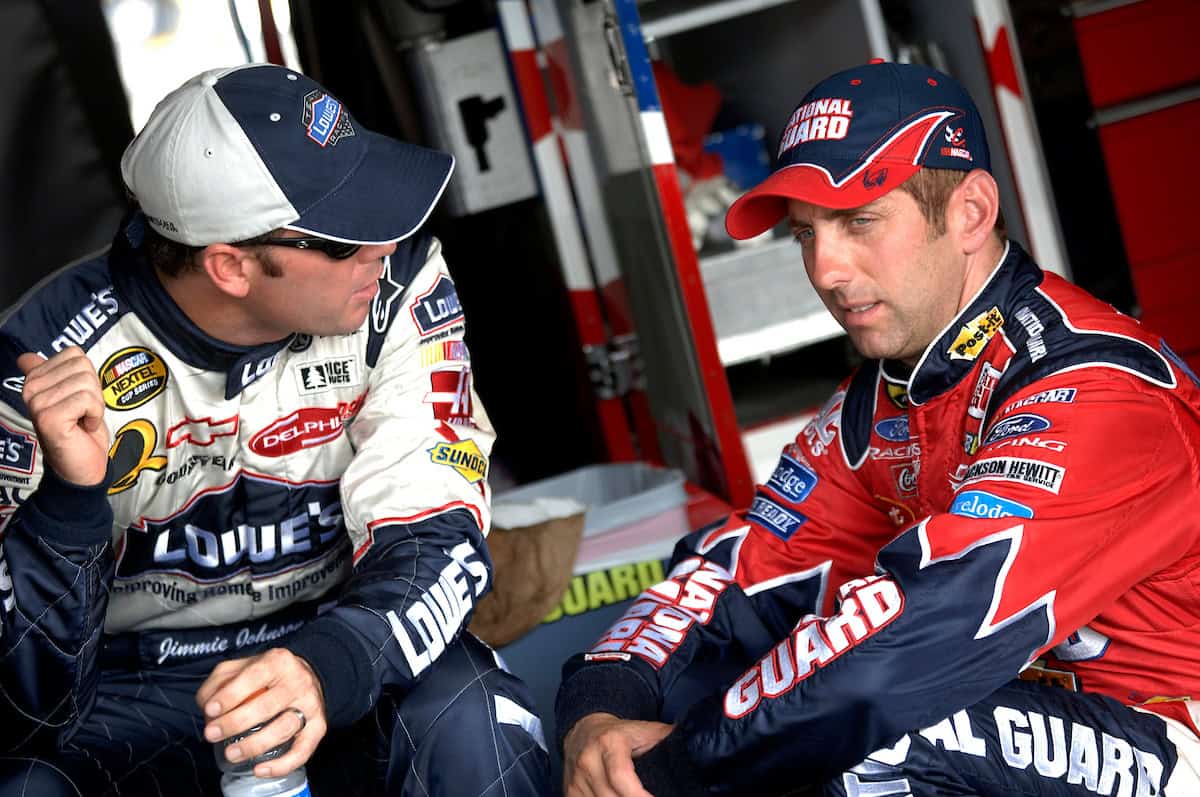
Of the 10 titles decided under the original Chase format, just two went to the driver who was leading the points on June 1. That was Jimmie Johnson in 2006, the year he won the first of five straight championships, and again in 2013. All told, Johnson accounts for six of the original Chase championships.
Johnson was the points leader to open June three times during Chase Era 1.0 — but the first time, in 2005, it was Tony Stewart who won the title.
Johnson is also the only driver to enter June as the leader more than once during the original Chase years. Dale Earnhardt Jr., Jeff Gordon, Kyle Busch, Stewart, Kevin Harvick, Carl Edwards and Greg Biffle each took a crack at leading the points to kick off summer, only to fall short when November rolled around.

The biggest June 1 lead with no title to show for it goes to Gordon, who led the 2007 standings by 132 points heading into summer.
Before you bet against Reddick, though, all of this is a microcosm of why it’s so hard to make comparisons across eras in NASCAR. While The Chase format is basically the same as it was in 2004, a lot has changed. The original Chase featured just 10 drivers before expanding to 12. In 2013, the sanctioning body added a 13th after a scandal involving Michael Waltrip Racing in the final race made it unclear who should actually have qualified.
The way drivers were seeded entering The Chase also changed a few times, with bonus points added and various tweaks made. Regardless of the way the reset stacked the field, the eventual champion came from the top three every time.
The biggest change came following the 2010 season, when NASCAR changed from the Latford points system that had been in place since 1975 to the current one where each position is worth one point. That big lead of Gordon’s in 2007 was less than one race worth of points under the Latford system.
That could be the biggest reason not to bet against Reddick just yet. His 97-point gap is actually bigger than Gordons’ was in ’07 in that he’s got about a two-race lead over Hamlin. The three drivers who lost their June 1 leads under the current points format had no more than a 36-point gap.
In terms of points, there’s now a 15-point bonus for winning. Reddick’s five wins have netted him a real advantage. Stage points are also in play that were not before.
While history suggests that Reddick may not be the title favorite right now, it’s not cut and dry. The Chase rewards real consistency more than the playoff format. Reddick has yet to finish outside the top 15 in 2026. Yes, the reset will erase some of his lead, but that consistency will matter even more in the final 10 races. That makes him the favorite based on his ability to do exactly what The Chase will demand.

The first Chase era belonged to Johnson because he and his team not only won regularly but figured out how to approach The Chase itself. Gordon, Johnson’s teammate, didn’t adapt as well, and despite having a couple of years where he led full-season points at the end of the year, he didn’t fare well in the 10-race reset.
It can be argued that the format is the problem if the best driver all year doesn’t win, but The Chase demands a near-perfect 10-race run. That favored Johnson’s team, who often sacrificed races in the summer to learn something for a track that was in The Chase.
Most of the drivers in the title hunt in 2026 don’t have Chase experience. Hamlin does, but it’s not always a good experience — he led entering the finale in 2010 and dropped the title to Johnson. The only current driver with a Chase title is Brad Keselowski, but his team has struggled for consistency with the Next Gen car.
History suggests that Reddick is not yet a strong title favorite. However, a lot has changed with the cars and Chase system itself. Keep an eye on the history books because the June 1 leader simply didn’t win the title most of the time. But keep an eye on the racetrack too, because history is rewritten every day.


Amy is an 20-year veteran NASCAR writer and a six-time National Motorsports Press Association (NMPA) writing award winner, including first place awards for both columns and race coverage. As well as serving as Photo Editor, Amy writes The Big 6 (Mondays) after every NASCAR Cup Series race. She can also be found working on her bi-weekly columns Holding A Pretty Wheel (Tuesdays) and Only Yesterday (Wednesdays). A New Hampshire native whose heart is in North Carolina, Amy’s work credits have extended everywhere from driver Kenny Wallace’s website to Athlon Sports. She can also be heard weekly as a panelist on the Hard Left Turn podcast that can be found on AccessWDUN.com's Around the Track page.