
For the first time since its creation in 1986, NASCAR’s All-Star Open was scrapped in favor of a 2026 All-Star Race format where the entire 36-car field raced on track for the first two 75-lap segments of Sunday’s (May 17) 350-lap feature at Dover Motor Speedway.
A whopping 26 cars raced in final 200-lap segment, and while the event was a total of 350 laps, all three segments were considered separate races, which meant the 200-lap finale served as the “official” All-Star Race. The end result of the brand-new format was an All-Star Race that seldomly felt like one.

The lack of an All-Star Open hurt the racing product in more ways than one, and the most obvious one is that the Open provided a compelling race for non-qualified drivers to make the show that, most importantly, was easy for casual viewers to understand.
In past editions, the All-Star Open would have some combination of the winner, the top finishers, the stage winners and/or the fan vote winner advance to the All-Star Race. The Open also shone a spotlight on the smaller teams that were trying to make the show in contrast to a typical points race that would prioritize the biggest stars and frontrunners. That made the Open a fun introductory event for the main event, and although the advancement rules varied here and there over the years, the premise was simple: if you finished well in the Open or had a massive fan following, you had the chance to compete for $1 million.
The process of open drivers qualifying for the 200-lap All-Star Race this year wasn’t as compelling, nor was it as easy to understand. Nineteen of the 36 drivers automatically qualified by either winning a race since the start of 2025 or by being a former series champion, leaving 17 drivers attempting to race their way in. With 26 cars for the final 200-lap segment, seven of the 17 “open” drivers would advance — six on performance and one via fan vote.
The way these drivers advanced on performance was by the best average finish in the first two segments (where the starting order for segment two was an inversion of the finishing order for segment one). In other words, NASCAR tried to reinvent the wheel by creating a far more convoluted process for drivers to advance when the previous process was perfectly fine and had worked for decades.
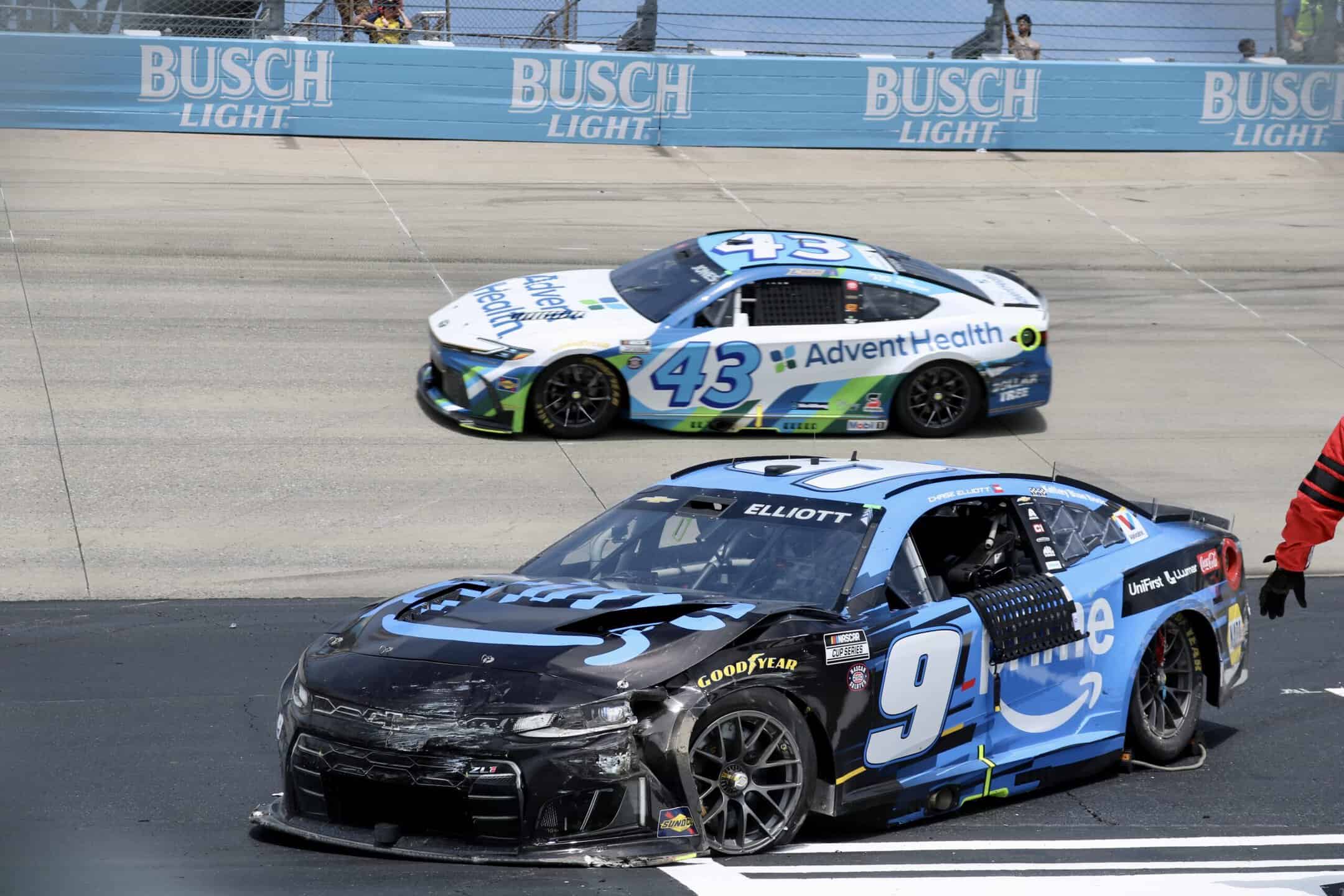
There was also a reason why the drivers who qualified for the All-Star Race in years’ past never competed in the All-Star Open, and it was on full display in the first 150 laps of Sunday, because two drivers who automatically qualified for the race, Chase Elliott and Ross Chastain, didn’t even have a car to compete with by the time the main event began.
Elliott was involved in The Big One on the frontstretch right before the end of segment one when Alex Bowman and Riley Herbst triggered a multi-car wreck on the frontstretch heading into turn 1. Elliott was the ultimate loser because he was the only driver qualified for the main event who was left with a junked car in a crash caused by “open” cars that were attempting to race their way in.

Chastain was done for the day after an early wreck in the second segment, and the 200-lap All-Star Race would be competed without two of NASCAR’s biggest stars and most popular drivers in the field.
But it wasn’t just those two. Kyle Larson and Ryan Blaney received heavy damage from a lap 2 crash that saw Ryan Preece’s car go up in flames. Kyle Busch and Christopher Bell were involved in the aforementioned wreck that took out Elliott, while Brad Keselowski and Bubba Wallace were collected in the aforementioned wreck that took out Chastain.
Larson, Blaney, Busch, Bell, Keselowski and Wallace all went to the garage and were able to make repairs for the start of the 200-lap feature, but they were still driving wounded cars that effectively rendered them non-factors for the rest of the day.
The other unintended side effect of Elliott’s and Chastain’s absences was that nine “open” cars qualified for the main event — more than half of the 17 that were originally trying to race their way in. There were so many open cars that either advanced or crashed out that the fan vote winner, Daniel Suarez, wasn’t even in the top five in fan voting the week before. Bowman, Noah Gragson and Connor Zilisch advanced, while Preece and Chris Buescher crashed out.
By the time the dust settled, we were left with a 26-car race contested between 17 “all-stars” and nine “open” cars. More than a third of the “all-stars” had suffered damage from crashes in the first two segments, so the 200-lap All-Star Race had an even mix between the two.
Combine the abnormal field with the whopping 350 laps run on Sunday, just 50 laps shy of a points-paying Cup race at Dover, and Sunday’s All-Star Race had far more in common with a typical points race than it did with the 40 years of mid-May exhibitions that preceded it.
If the All-Star Race returns in 2027, it needs to be moved away from Dover, which never should’ve lost its points-paying Cup race in the first place. The race also needs to go back to the drawing board for a new format, and most importantly, the All-Star Open needs to return with it. The Open had been the sturdy opening act for more than 40 years, and as the old adage goes, if ain’t broke, don’t fix it.


Stephen Stumpf is the NASCAR Content Director for Frontstretch and is a three-year veteran of the site. His weekly column is “Stat Sheet,” and he formerly wrote "4 Burning Questions" for three years. He also writes commentaries, contributes to podcasts, edits articles and is frequently at the track for on-site coverage.
Find Stephen on Twitter @stephen_stumpf