

For years, Texas Motor Speedway was the punching bag of the NASCAR Cup Series schedule.
The 2017 repave that saw the reconfiguration of turns 1 and 2 — decreasing the banking from 24 to 20 degrees and widening the turns from 60 to 80 feet — was nothing short of a disaster, as the changes turned Texas into a one-groove racetrack. Cars were unable to pass and were stuck hugging the bottom line or the strips of PJ1 traction compound when applied.
The reconfiguration wasn’t popular with fans or drivers alike. When asked in a 2022 press conference what he would like to see at Texas if the track were to be repaved or reconfigured again, Kyle Larson — the defending race winner, mind you — thought that they should “demolish this place and start from scratch.”
Fan turnout slumped. By 2021, the stands were renovated and seats were removed. The track, which could seat more than 160,000 people upon opening in the late 1990s, was truncated to a capacity of 75,000 and struggled to fill that.

The track’s second Cup date became the All-Star Race for 2021 and 2022, an arrangement that only lasted for two seasons due to the negative reception. In 2023, the track was knocked to just one annual Cup race for the first time since 2004.
Not even the Next Gen car — which led to a renaissance of 1.5-mile tracks upon its introduction in 2022 — was able to turn the tide at Texas, and the racing still struggled as a result of the 2017 reconfiguration.
The struggles that Texas faced had a hint of irony because, for many, TMS was the prime example of NASCAR “leaving its roots” once the sport exploded in popularity.
Texas was the first of multiple 1.5-mile tracks in large media markets that were added to the Cup calendar in the late 1990s and early 2000s, leading to an era where the schedule was oversaturated with them. Texas’ first Cup date came at the expense of North Wilkesboro Speedway, a short track in the heart of North Carolina that was shuttered in 1996 and, aside from a brief revival in 2010, sat dormant for decades.
Texas’ second Cup weekend came to be as a result of the Ferko v. NASCAR lawsuit that was settled in 2004, the aftermath of which saw the removal of Rockingham Speedway from the schedule and the loss of Darlington Raceway’s fall Southern 500: two more tracks in the heart of the South that bore the brunt of NASCAR’s expansion as stock car racing approached its commercial peak.
Flash forward more than a decade, and Darlington’s Southern 500 returned to Labor Day weekend in 2015, and the track has hosted multiple Cup races per year since 2020. Rockingham made its return to NASCAR’s top three series in 2025, while in 2023, North Wilkesboro pulled the uno reverse card and snatched the All-Star Race from Texas, the very track that took one of its Cup dates back in 1997.
NASCAR was now in the polar opposite situation that it found itself in when TMS was first built. The start of the 2020s decade saw the sanctioning body expand its footprint in the Carolinas, while Texas — one of the first places it had left the Carolinas for — was the one struggling now. And with the attendance woes and the unpopularity of the racing at the facility, there was a time when the future of Texas felt very much in doubt.
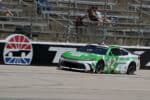
But since 2024, the seeming uncertainty surrounding Texas has subsided. After a September 2023 race weekend where the stands looked sparse and the air temperatures were north of 100 degrees Fahrenheit, the 2024 races were moved to early May. Attendance improved, and it improved once again in 2025.
And just this past Sunday (May 3), what sounded unheard of for the current iteration of Texas became a reality: the track sold out its Cup race.
Texas may not have had 150,000 people on hand last Sunday like it consistently did 20 years ago, but a sellout is huge considering how far the track had fallen from its heyday. The move to early May couldn’t have worked any better, and the move to one annual Cup race has breathed life back into the facility, just as it has for other tracks that had struggled to fill two dates like Pocono Raceway and New Hampshire Motor Speedway.
The racing has also improved, as the pavement has aged, the track has widened out and the cars are now capable of running side-by-side on a consistent basis. The track isn’t putting on barnburners, per se, but after years of being the butt of jokes, the track has found an audience, found its footing and is back to being a respectable stop on the schedule.
The Dallas-Fort Worth metroplex is the fourth-largest urban area in the United States, so the continued success of TMS is crucial for NASCAR. And with how dire the situation looked at TMS just a few years ago, the track’s resurgence has been an impressive and welcome surprise.


Stephen Stumpf is the NASCAR Content Director for Frontstretch and is a three-year veteran of the site. His weekly column is “Stat Sheet,” and he formerly wrote "4 Burning Questions" for three years. He also writes commentaries, contributes to podcasts, edits articles and is frequently at the track for on-site coverage.
Find Stephen on Twitter @stephen_stumpf