

The laps were winding down in Chicago.
Tyler Reddick was making a hard charge towards the front of the pack to try and get by Ty Gibbs and the race leader Shane van Gisbergen.
The odds were that he wasn’t going to make it before the laps wound down. With the leader half a lap from the white flag, Cody Ware was barreling towards turn 6.
He hit the brakes and the left front brake rotor exploded. His car was traveling at approximately 93 mph as it plowed into the tire barrier at the entrance to turn six.
Approaching the track from the north was a dark storm that promised to hit the track with rain and potentially lightning. The flagman held on to the caution flag for 37 seconds until van Gisbergen circulated all of the way to the start/finish line and saw the white flag.
Once that flag was accepted by the leader, the next flag signified the end of the race. That was the caution which finally flew for Ware’s incident.
The first thing that is entirely headshaking about this incident is that the impact for Ware was tremendous. Some 20 to 30 feet up the track from where Ware’s car came to rest, there was a NASCAR official waving a blue flag to inform other cars entering the turn of the danger of a car buried in the tires. When NASCAR was questioned about the delay in the presentation of the caution flag, they rested on the fact that they were unaware of the severity of the impact for Ware.
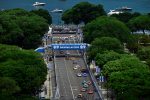
For those of you who have been asleep since the first 60 or so years of NASCAR, the sport now employs spotters around the entire length of the tracks where their races take place.
On large ovals, that might not be that many people but on a road course, or even more importantly, a street course, there are more than 10 turns and there are, or should be, spotters for every corner. Saying that they were unaware of the severity of the impact is the most asinine comment that a race fan should be expected to swallow, let alone keep down.
This is the pinnacle of full-body motorsports in the world. It is a multi-billion-dollar industry that has to be responsible for the safety of hundreds of competitors every single race. To claim that they were naive to the impact is as big of an insult to the fanbase as ever been laid bare on them.
While the exact semantics of the track officiating system are not 100% clear, the fact was a man was standing close enough to touch the car right before the impact and was waving a flag to warn the other competitors of the incident. That man absolutely should have the means, by either headset or officiating partner, to communicate the severity instantaneously so that NASCAR would have known to throw the caution.
NASCAR also monitors the race communications of every team in the event.
Seconds after the impact Ware radioed his team and clearly said “I need help.”
Even if they did not see the incident, hearing the driver plead for assistance is grounds enough to issue the command to throw the caution well before van Gisbergen reached the line.
As mentioned before, there was weather approaching the area. It was a thin but severe line of storms based on the radar images. If a caution flew, there was a decent chance that not only would the race obviously go into overtime, it would most likely subject the teams to a wet track, which certainly could lead to numerous attempts to complete the race.
The additional potential for lightning would mean that the fans would have to be evacuated from the stands and the race would be delayed until a period of 30 minutes without lightning. While that sounds like a major inconvenience, it should have had absolutely ZERO impact on whether a caution flag flew for a major impact where a driver is pleading for help afterwards.

We all know that NASCAR will never, ever admit to refusing to throw the caution due to the potential inconvenience of a weather delay. They’re going to hang their hat on the incredibly flimsy excuse that they were unaware of the intensity of the impact. While they might think that sounds like a legitimate reason, anyone who has watched races in the last 20 or so years knows that there are enough officials spotting on the race course where that excuse holds zero water, much like the track would of if it had rained.
The time has come for an inquiry over the calls from race control. This is not the first time where there has been a glaringly questionable caution flag call at the end of a race.
Last October, Parker Kligerman was about to score his first Xfinity Series race victory at the Charlotte Motor Speedway road course. He crossed under the flag stand as the white flag flew and Leland Honeyman Jr. was buried in a tire barrier, similar to Ware.
Even though it appeared that the caution was after the flag, NASCAR claimed the caution was ordered beforehand and sent the race into overtime, where Kligerman lost the race. In the Daytona 500 this year, NASCAR sat on a caution while William Byron, Reddick and Jimmie Johnson raced to the finish line while cars were wrecking just days after they threw the caution right before the checkered for a very similar situation.
The next week, the sport was at Atlanta Motor Speedway and they held onto the caution in the Xfinity race as the leaders crossed the finish line before almost immediately having to dodge wrecking cars and debris.
The next day, a minor spin on the back straight resulted in cars spinning back up onto the track, albeit behind the vast majority of the field by the time they came up. There was a three-wide battle for the lead charging into turn 3, setting up for an amazing finish, but NASCAR threw the caution. The inconsistency has been around for years but has been especially questionable this year.
The caution flag serves multiple purposes but the absolute, number one reason is to ensure safety for drivers and their teams.
If a situation arise where someone is or potentially could be injured, the flag must fly immediately. Whatever the ramifications are after the flag flies will be dealt with when it is time.
The bottom line is simple: Safety is Always the Priority

What is it that Mike Neff doesn’t do? Mike announces several shows each year for the Good Guys Rod and Custom Association. He also pops up everywhere from PRN Pit Reporters and the Press Box with Alan Smothers to SIRIUS XM Radio. He has announced at tracks all over the Southeast, starting at Millbridge Speedway. He's also announced at East Lincoln Speedway, Concord Speedway, Tri-County Speedway, Caraway Speedway, and Charlotte Motor Speedway.
Damn GWC is the problem. Let races end under caution and this wouldn’t be a problem.
Great article and I wholeheartedly agree. The fact that race control was not even in Chicago is astounding to me. A muti-billion dollar operation and the premiere racing series in the US, how do you not have officials at the track to officiate the race?
Nascar loves to use the word safety when it benefits them, but when its time to put their money where their mouth is, they fail miserably.
It seems NASCAR abhors transparency, whether it’s financial or officiating information.
This of course leads us all to question why, and logic says the reason is because they are hiding something which may reflect poorly upon them.
I also agree the delay in the caution was silly, no matter the cause. If it’s because the call was made from a remote location, that’s obvious incompetence. If it’s because of concern of the rain or any PR impact, that’s due to having priorities not in line with safety.
Either way, it’s yet another avoidable black eye for NASCAR, and if they’d stop being intentionally opaque about every single thing they do, it would likely lead to improvement, and less negative press due to having to be a detective about what really happened.
I didn’t want to see a caution. I didn’t want to see a Green-White-Wreckers overtime moment. I didn’t want Reddick to win the race.
I don’t bet on NASCAR races. A caution would have changed everything for those that placed bets. NASCAR promotes and accepts money from legal bookies. A races can be easily manipulated with the caution flag. The house always wins.
Maybe NASCAR hates 23XI and didn’t want them to have a chance to win under the G-W-C. Personally, I look forward to 23XI losing their charters and missing races in the near future.
Stop the G-W-C manufactured excitement gimmick. That’s not safe. Allow the race to finish naturally, even if it ends under caution.
It might make NASCAR a little more honest.